It was like we were there that afternoon of January 6, 2021 as we watched in disbelief the violence erupting at our nation’s Capital. We kept checking across various news outlets from MSNBC to Fox News to make sure what we were seeing was really happening. And, sadly, we were confronted again and again by the same violent images. In the days that followed, many lawmakers on both sides of the aisle would forcibly, and rightfully, condemn the violence.
But soon the tide was recalibrated as allegiance to our flag and Republic went silent, drowned out by the growing vocal allegiance to Trump instead. Memories began to morph as Republican lawmakers tried to convince us that, essentially, we hadn’t really seen what we’d seen. Desperate to remain in good stead, strengthen the alliance, and court favor with their emerging autocratic leader, spines went soft. Most troubling, the ability to stand for the true heroes of the day, the Capitol Police officers, waned.
And today this morphing has culminated in a full reversal of the facts of what actually happened on January 6th. Now we’re told not only did we not see what we saw but, in reality, just the opposite happened. By continuing to describe the insurrectionists as “hostages,” Trump and his top guard have been reprogramming us to see what they want us to see: the violent mob that attacked the Capitol that day were simply true, unarmed, patriots.
This, of course, was predictable and unsurprising. After all, the so-called hostages had done their due diligence by showing clear and proper allegiance to Trump before they tried to destroy all constitutional vestiges of power. And we, having been duly programmed, were now primed to at least consider that it was really the rioters who were the true victims of that day. In this way, Trump could pardon them all with minimum fear of political backlash.
“I pledge allegiance to President Trump, and to the Republic which he has formed . . .”
It just may have worked—“if” we hadn’t seen with our own eyes what we saw. But we did. We did, in fact, see many of the rioters come armed with a variety of weapons such as stun guns, pepper spray, baseball bats and flagpoles wielded as clubs. We saw the violent attacks on police officers just doing their sworn duty that day. 140+ of them were injured, some seriously. Others would die in the days and weeks following including Officer Brian Sicknick, 42, an Iraq War veteran, who died the next day from wounds caused by a fire extinguisher to the head. We saw the lynching noose and heard the cries, “Hang Mike Pence.” And we watched, horrified, as the Confederate Flag was proudly carried through the Capitol.
Those of us who witnessed the events of January 6th must now not remain silent, lest we appear to be following along like imprinting ducklings to Trump’s self-serving propaganda. We must stand with the National Association of Police Officers and the International Association of Chiefs of Police, along with many US citizens, Republican and Democrat, who’ve condemned Trump’s decision to pardon those involved in the insurrection.
We must not cower and avoid dialogue as Trump’s top guard is doing. This should show us all that they’re unwilling to engage in any discussion that may potentially displease or threaten their leader. They’re clearly fearful and rightly should be. After all, autocrats get even particularly when they believe they’ve been touched by the providential hand of God and now have a Supreme Court willing to shelter and protect all actions done under the cloak of the office.
“I pledge allegiance to President Trump, and to the Republic which he has formed, one nation duly governed by him, God’s chosen servant . . .”
Sadly, Trump told us who he was in 2016 when he said, “I could stand in the middle of 5th Ave. and shoot somebody and I wouldn’t lose any voters.” At the time, most of us dismissed it as simply a grossly inappropriate display of chest-thumping. Today, we know it’s absolutely true. Trump could stand out in front of the Capitol building, kill someone while many watched, and by the evening news the channels supporting Trump would be assuring us that we really hadn’t seen what we’d seen—that what we’d really witnessed was, in fact, a most courageous and patriotic act carried out by our illustrious, divinely appointed, leader.
And, we’d all be encouraged to pray for him, placing our hands over our hearts as we remembered our Pledge of Allegiance:
“We pledge allegiance to President Trump, and to the Republic which he has formed, one nation duly governed by him, God’s chosen servant, to offer liberty and justice as decreed.”
To all who treasure democracy, let’s not falter at this critical moment! Let’s fight for the country our forefathers dared to envision, now on life support, so, just maybe, our children and grandchildren might one day still be able to stand and pledge allegiance to the flag and to our great Republic for which it stands.
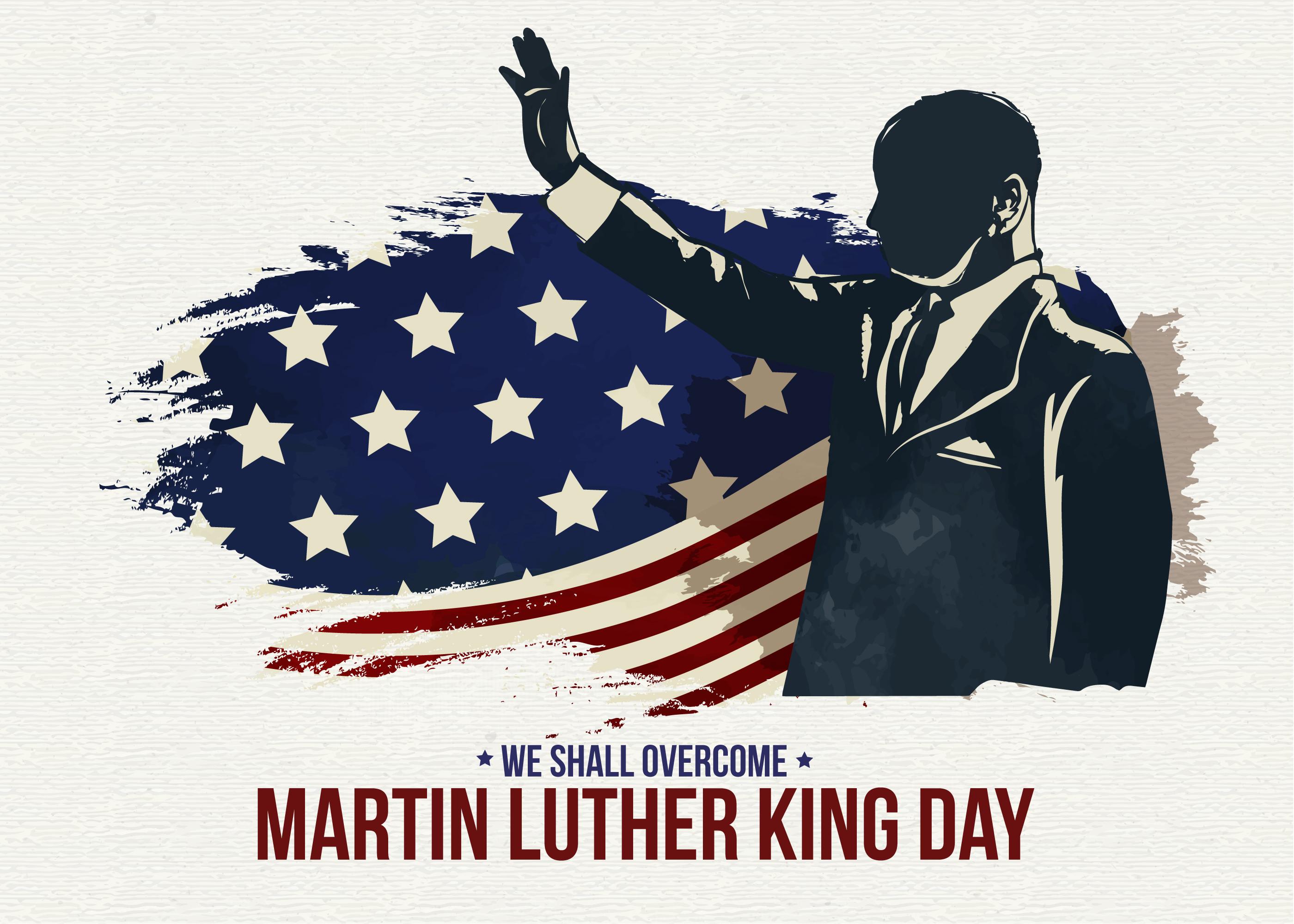
In honor of Dr. Martin Luther King, Jr. day . . . A blog I first posted in January 2020.
In 2016, I visited the largest mosque in New England, The Islamic Society of Boston Cultural Center (ISBCC), in Roxbury Crossing, MA, to hear Sheikh Yasir Fahmy speak on The Toxicity of Othering. As usual, I did not receive what I expected. No, I received so much more!
About a third of the way through, I started to recognize similar teachings to that of Dr. Martin Luther King, Jr. I noticed that if I were to remove the Arabic phrases the Sheikh occasionally included and changed “Allah” to “God,” that, indeed, the core message would seem to be the same. Curious, once home, I listened to the video again off the ISBCC website and printed out a transcript. From there, my journey began and below are my findings which led to the creation of The Sheikh & The Preacher. The essay, expanded from this blog, was chosen for inclusion in the anthology One Nation, Indivisible: Seeking Liberty and Justice from the Pulpit to the Streets, edited by my former professor Celene Ibrahim and released by Wipf and Stock Publishers in 2019.
The four key categories below came to me as I heard the similarities unfold. The sub-headings I also included as a way to highlight the specific teachings within each category. Sheikh Yasir Fahmy’s quotes have been occasionally edited by punctuation only to facilitate ease of reading. The numbers noted at the end of each quote indicate where in the video the wording appeared. The quotes by Dr. Martin Luther King, Jr. are taken directly from the sources indicated at the end of each quote.
Enjoy…
Origins of Unhealthy Otherness
Exalting the Self and the Self’s Group as Superior
The Sheikh:
“We want upliftment. We want recognition. We want stability. We want to be known and recognized. We want to be justified. Because of our distance from Allah, we think that the only way I am to make myself big is by belittling others.” (25:05 – 25:34)
The Preacher:
“We all have the drum major instinct. We all want to be important, to surpass others, to achieve distinction, to lead the parade…And the great issue of life is to harness the drum major instinct. It is a good instinct if you don’t distort it and pervert it.” (Sermon at Ebenezer Baptist Church, February 2, 1968)
Outcomes of Unhealthy Otherness
Removing the Inferior Others
The Sheikh:
“[At the extreme, this need for recognition] becomes toxic, demonic, destructive. The self becomes self-aggrandizing and self-absorbed. (2:57 – 3:11) You are a danger to my existence, to my power. You threaten me so I want to destroy you. (5:35 -5:43) [These are] diseases of the heart that exist at the root of this toxic other. (18:44-18:50)People have trouble distinguishing between religious or cultural expressions and human value.” (9:48 – 9:54)
The Preacher:
“We’ve been in the mountain of war. We’ve been in the mountain of violence. We’ve been in the mountain of hatred long enough. It is necessary to move on now, but only by moving out of this mountain can we move to the promised land of justice and brotherhood and the Kingdom of God.” (Sermon at Temple Israel, February 26, 1965)
How to Combat Unhealthy Otherness
Humbly Examine the Self
The Sheikh:
“So, brothers and sisters as we think critically about this disease that exists in our society we have to begin with ourselves. We begin by looking in the mirror and thinking, ’Am I a person who otherizes?’ Am I someone who puts others into other ugly categories and belittles them because of who they are?” (21:49 – 22:13)
“We must take a step back and before really thinking about what people are doing to me, I have to ask myself, ‘To what extent do some of these diseases exist within me?’ For to them as you do it, it will be done to you. Before we sit there and look at others, we have to ask, ‘Am I truly embodying the best of prophetic ideals in this particular regard?’” (7:10 – 8:02)
The Preacher:
“Now first let us deal with this question, which is a practical one: How do we go about loving our enemies? I think the first thing is this: In order to love your enemies, you must begin by analyzing self. And I’m sure that seems strange to you, that I start out telling you this morning that you love your enemies by beginning with a look at self.” [later] “There might be something within you that arouses the tragic hate response in the other individual. And this is one of the tragedies of human nature. So, we begin to love our enemies and love those persons that hate us, whether in collective life or individual life, by looking at ourselves.” (Loving Your Enemies, Nov. 17, 1957)
How to Cultivate Healthy Otherness
The Sheikh:
The purpose of all creation is ‘so you may know one another,’ to have an intimate engagement with people. [Allah said] I made you into these different tribes that you might know one another. So, it is through humility—that is the way we begin to heal the pains of our society.” (29:36 – 29:56)
The Preacher:
“People fail to get along because they fear each other; they fear each other because they don’t know each other; they don’t know each other because they have not communicated with each other.” (Advice for Living, May, 1958)
Recognize the Common Unity and Destiny of the Human Soul
The Sheikh:
“When Muhammad stood up before a Jewish funeral procession and was asked why, he replied, ‘Is he not a soul that deserves honor, dignity and respect? He is a human soul and, therefore, has inherent value and has inherent sacredness and sanctity and the human soul should be honored and respected regardless of the realities of that person. That’s the prophetic ideal that must thrive in societies.’” (8:15 – 8:59)
The Preacher:
“They [our white brothers] have come to realize that their freedom is inextricably bound to our freedom. We cannot walk alone. [later] We will be able to speed up that day when all God’s children, black men and white men, Jews and Gentiles, Protestants and Catholics, will be able to join hands and sing in the words of the old Negro spiritual free at last! Thank God Almighty, we are free at last!” (I Have a Dream Speech, August 28, 1963)
See the Sanctity Within Each Person
The Sheikh:
“Am I someone who has genuine honor for others, genuine love? Can I see the sanctity in human beings no matter who they are? Rather than looking out into the world, rather than seeing all the ugly, I see all the beautiful. I see the beauty of human beings who are struggling to just be there.” (22:17 – 22:34)
The Preacher:
“I have a dream that my four little children will one day live in a nation where they will not be judged by the color of their skin but by the content of their character.” (I Have a Dream Speech,August 28, 1963)
Seek to Love and Forgive Your Enemies
The Sheikh:
“Only Allah can measure the God consciousness of others. It’s not your responsibility to identify others as being this or that. (27:40 – 28:03) We hold dear to our beliefs. We have a distinct desire to see that human life is treated as sacred regardless of the differences that may exits—even in the quote-unquote enemy. No matter your worst enemy, whoever they may be, they deserve dignity as prescribed by Allah.” (16:22 – 16:58)
The Preacher:
“And so I stand here to say this afternoon to all assembled here, that in spite of the darkness of this hour, we must not despair. We must not become bitter nor must we harbor the desire to retaliate with violence. No, we must not lose faith in our white brothers.” (Eulogy after bombing of Sixteenth Street Baptist Church, September 18, 1963)
Care for One Another
The Sheikh:
“That’s what it means to be a mercy to mankind. To dignify others is to make sure that everyone comes before me. I want people to be lifted high and if it requires that I bow down and that my neck is broken for others, I will do it. That is the prophetic spirit. That is what it means to honor others, to care for others, regardless of religion or ethnicity or race or even in financiers in the economic realm.” (20:16 – 20:50)
The Preacher:
“The true neighbor will risk his position, his prestige, and even his life for the welfare of others. (From his 1963 book, Strength to Love.) Everybody can be great because anybody can serve. You don’t have to have a college degree to serve. You don’t have to make your subject and verb agree to serve. You only need a heart full of grace; a soul generated by love.” (The Major Drum Instinct, sermon adapted from the 1952 homily ”Drum-Major Instincts” by J. Wallace Hamilton, 1952)
Cultivate a Consciousness of Love
The Sheikh:
“The most dignified and the most honorable amongst creation is the one who has the most God consciousness.“ (26:50 – 26:57)
The Preacher:
“Inject within the very structure of the universe that strong and powerful element of love.” (Loving Your Enemies, Nov. 17, 1957)
Seek to be Vehicles of Goodness and Unconditional Love
The Sheikh:
“May he make us vehicles for good on this earth. May he make us prophetic vehicles of change toward goodness on this earth. May we be sources of mercy for others on this earth.” (26:57 -29:28)
The Preacher:
“Man must evolve for all human conflict a method which rejects revenge, aggression and retaliation. The foundation of such a method is love. [later] I believe that unarmed truth and unconditional love will have the final word in reality.”(Noble Peace Prize Acceptance Speech, December 10, 1964)
Closing Quote: The Sheikh
“May Allah rectify the conditions of our humanity on this earth. May he allow it to begin with us. May he guide us, guide through us. May Allah rectify our hearts of the diseases that have caused the problems that we see today so that we can see a society that is prospering.” (30:17 – 30-22)
Closing Quote: The Preacher
“I have a dream that one day every valley shall be exalted, and every hill and mountain shall be made low, the rough places will be made plain, and the crooked places will be made straight; and the glory of the Lord shall be revealed and all flesh shall see it together.” (I Have a Dream Speech,August 28, 1963)
Rev. Dr. Stephanie Rutt offers her work through the Tree of Life School for Sacred Living, LLC, and also serves as Founding Minister of the Tree of Life Interfaith Temple in Amherst, NH. She is the author of five books and additional interfaith curricula. To learn more about her books, as well as online and in-person classes and workshops, please visit her website at https://www.stephanierutt.com.


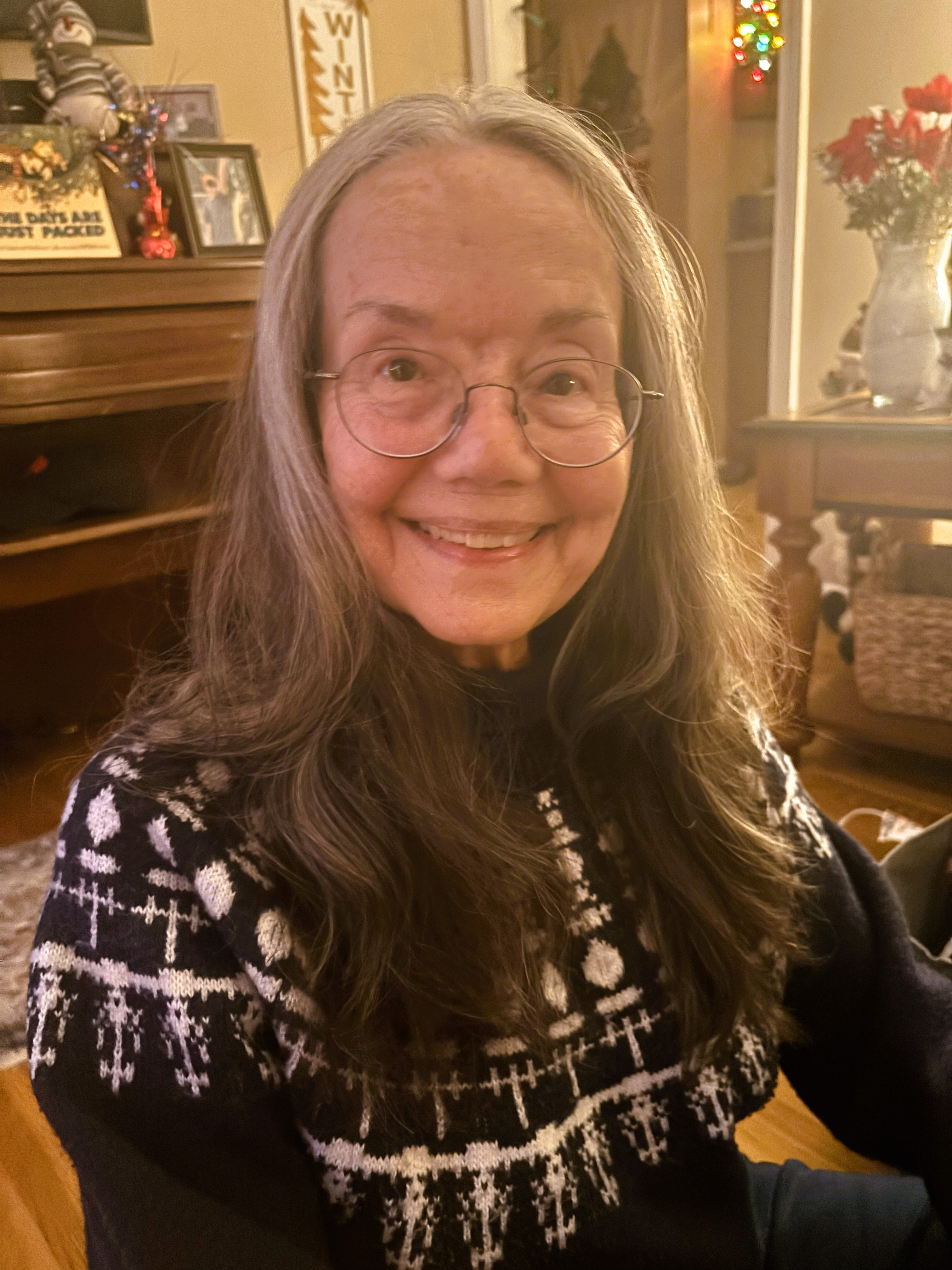


 Stephanie Rutt