
Monthly Archives: July 2025

The “Big Beautiful Bill” and Losing the Soul

Jesus said, “Just as you did it to the least of these, you did it to me.” Matt. 25:40

It’s hard to see the “least of these.” Harder to watch. Yet, when I can, it stirs a place in my soul, as it did just recently. I’d taken an elderly friend who’d developed a 103.6 fever to our local hospital emergency room. Now, I’m no stranger to the ER. I’ve spent my share of time there. 

But on this night, if you could roll all my former visits into one you still couldn’t match the acute level of suffering and despair I witnessed. My friend and I took the last two seats. Many more patients waited in the hallway, some sitting on the floor. I couldn’t see all of them but one I could see was making herself known. 

“You f…’in bastard! I hate you!” she screamed at each person as they walked by, flailing her arms and thrashing her whole body as she lunged forward in her wheelchair. She was young, maybe early twenties and looked disheveled, unkept. A security guard at the exit door stood stoic. Several people with her kept making random, feeble, attempts to quiet the noise. Finally, they took turns resting, leaning their heads against the wall.  

In the waiting room, a young man moved from one distorted position to another on the floor. He seemed unable to find a good spot where he wasn’t in pain. And before we knew it, he rushed to get a barf bag and was in the corner violently throwing up. His screeching, gaging sounds, let loose all over the ER. One of the nurses gave him a light blanket and, for a little while, he was still and quiet on the floor. Then, he’d start to move again and throw up. This cycle repeated itself a number of times during the hours we waited.

And then there was Jonathan, as the ER staff called him, not his real name. It was his third visit there that day. Jonathan talked to himself a lot. He was confused and incoherent. His clothes were beyond dirty. At one point, he needed to go to the bathroom and kept yelling, slurring, “Bathroom!” He couldn’t figure out how to get his wheelchair to move toward the door. When it seemed no one was available to help, I pushed him out into the hallway and asked the security guard if there was someone who could take him to the bathroom. The guard responded, offhandedly, that he’d do it.

After over five hours, my friend did finally get seen. As we were leaving, I thought about the group of nurses there during the night. They were scrambling, working so hard to keep up with it all, an exhausting range of physical, emotional and mental health crises, the toll of human suffering, particularly poignant and piercing on this night, the screams, desperation, the smells.

 At one point, close to midnight with the waiting room still full, one of the nurses came out and said, “Please have patience folks. We’re doing the best we can. We’ll get to you as soon as we possibly can.” She was hunched slightly forward and had a soft apologetic gaze. She looked to be carrying all of us and time was running out on her endurance.        

The next day, as I read again about how Trump’s “big beautiful bill” could cause ten million people to lose their health insurance, I thought about how much more crowded our ERs are about to get. In particular, more patients like the woman in the hallway, the young man on the floor, and Jonathan.

I’d recommend, before voting on any legislation that would disproportionately impact the most vulnerable, lawmakers should be required to spend time in some of the places where “the least of these,” can be found: the local food pantries, shelters, and ERs. Hear their screams, smell their vomit, push their wheelchairs. As it’s reported that over half of our legislators are millionaires, it’s probably been a while, if ever, since they’ve found themselves in such places.

And given that many who voted for the “big beautiful bill” would profess to be Christian, I could only hope that in visiting such places, some might also get stirred and remember, with a sober and humble heart, that key teaching of Jesus. Because unlike the biblical teaching where the least among us are served, the “big beautiful bill” hurts “the least of these.” Sobering, indeed.

But, just perhaps, if the soul were moved, I’d hope they’d renounce their current actions and, instead, follow Jesus’ teaching and do what I believe he would do. They’d make sure the young woman in the hallway got caring mental health services, the young man a supportive detox unit, and Jonathan appropriate treatment and medications and, maybe, perhaps most special of all, a clean set of clothes.

For after all, “What will it profit a man to gain the whole world and lose his own soul?” Matt. 16:26
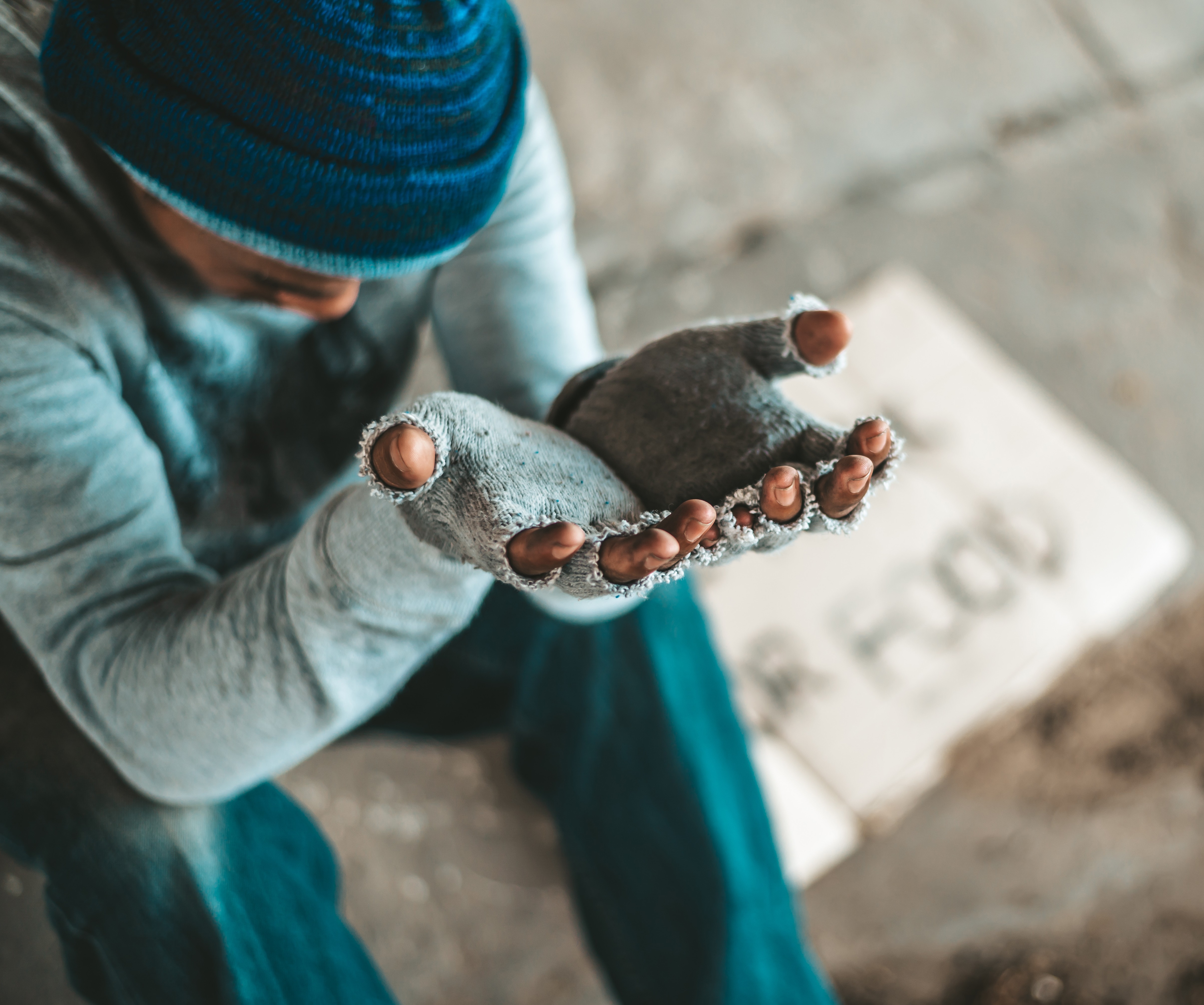

Image by jcomp courtesy of freepik.com

Leave a comment

Filed under Uncategorized

“Give me your tired, your poor . . .”

“Give me your tired, your poor,
Your huddled masses yearning to breathe free,
The wretched refuse of your teeming shore.
Send these, the homeless, tempest-tost to me,
I lift my lamp beside the golden door!”

The images flickered. Faces. Smiling. Flashing across the screen and then gone too soon. The children just arriving on Ellis Island, a part of the Ken Burns’ PBS documentary, the Statue of Liberty. I wanted to replay the images, pause them. Take them in. “THIS is what we once were,” I whispered silently.

No more. When I saw the mural of the Statue of Liberty created by Judith de Leeuw and revealed in France just before the 4th of July, I fully understood. Our great lady ashamed, covering her face, grieves her loss.

And so, she should. How starkly different those faces were just a few years ago after crossing our southern border. In Trump’s America, we showed zero-tolerance. Instead of laughter, cries pierced the stale air, raw and shrill, from the shock of being taken from loved ones and put in makeshift cages. Children. In cages. Roughly 4,600 of them separated.   

The Biden administration instituted a task force to reunite the children with their parents or relatives but Trump rescinded it, even with hundreds still searching, as part of his first executive order. Today, the policy continues. In June of this year, CNN reported that approximately 500 migrant children had already been taken from their homes and put in government custody. The cries resume now though largely hushed from the public ear.

And our grieving great lady reminds us, “This is NOT who we once were.”

Designed by Frederic Auguste Barthold, the statue was a gift from France to commemorate the centennial of the American Declaration of Independence and dedicated by President Grover Cleveland on October 28, 1886. However, it may surprise some to learn that the well-known words on the statue welcoming immigrants, taken from “The New Colossus” by Emma Lazarus, were not added until 1903, nearly two decades after the statue was unveiled. 

The original inspiration for the monument was not immigration but emancipation, notably symbolized by the broken shackle and chains laying at our lady’s feet. Just after the Civil War, they were a visual representation of the end of slavery in the United States. Of course, this ideal has been slow to find a living space where our African American brothers and sisters may breathe free.

Courageously, in the words of the late Congressman John Lewis, the “good trouble” continues for the tempest-tost in search of a home in this land where each “will not be judged by the color of their skin but by the content of their character.” The broken shackle and chains echo across time the great dream herald by the late Dr. Martin Luther King, Jr. 

But in Trump’s America, these echoes are fading, almost silent now, in what can only be called a targeted attempt to white-wash history. Juneteenth Day was snubbed. Federal agencies continue to eliminate or obscure the contributions of Black heroes such as the Tuskegee Airman and Harriet Tubman. Diversity, equity, inclusion are dirty words now needing to be eradicated in order to create a more perfect, colorblind, union. Trump even had the bronze bust of Dr. Martin Luther King, Jr. removed from the Oval Office which had been there since 2009.

And again, our grieving great lady reminds us, “This is NOT what we once aspired to be.”

And the broken shackle and chains, which have come to speak for all forms of oppression, also represented the hope of women who, at the time, were fighting for the right to vote. Only two women were invited to the unveiling of the statue which sparked protests by suffragists. American abolitionist Matilda Joslyn Gage, cursing the irony of a female figure representing liberty, described the whole affair as “the sarcasm of the 19th century.”

But, undaunted, the suffragists chartered a boat to sail around the harbor to protest. And our lady must have smiled as she knew that soon, on the teeming shore, she would become the focal point for discussions on gender equality. 

Today in Trump’s America, many older women, in particular, are desperately trying to lift the lamp and shine a light on what is quickly being lost – some of the very freedoms those suffragists, and many others since, so courageously fought to obtain for us. Their efforts left all women with the greatest of gifts: most notably, choice. Choice to live a life of our choosing.

And so, we see it’s no accident that the Statue of Liberty is a woman, a depiction of Libertas, the Roman goddess of freedom, offering her torch to guide all who flee oppression. 

Americans, will we choose freedom or Trump’s American autocracy? Will we help our great lady to lift her torch high once again and light the way for all of us and for those to come?  

I pray so for in all her glory, welcoming those children of long ago, our great lady reminds us, “THIS is what we once were.”

Image courtesy of Freepik.com

2 Comments

Filed under Uncategorized