I’ve just sent the final draft of Dancing on the Moon: The Non-Ordinary Life I Never Saw Coming, a Spiritual Memoir, to my publisher. It’ll be out in the fall. I started the journey three years ago and, along the way, it’s taken me down many twists and turns. Starts. Stops. Re-dos. Should this stay in, come out? Sometimes it’s felt like taking old photographs from a cedar chest, faded and dusty, to hold gently once again and to hear what is still whispering across time. Some of those old photos have asked that I sit long and quiet to see what part they may still want to play in this new photo-story album. In these cases, nothing less than an excavation of the heart was needed.
My memoir begins with an incident that happened with my grandfather when I was ten years old, leaving me a stutter, and culminates with my TEDx talk in 2018. I would outgrow the stutter but, truly, came to know it was the essential beginning. It, together, with a 30 second encounter with a public speaking teacher, Miss Shirely Curtis, to whom this memoir is dedicated, would set my trajectory and ignite my path.
I was a sophomore in high school and had read a story I’d written with minimal stuttering. After class, she told me she was going to recommend me for the school speech club because she said, “You have something to say.” (Blessedly, one of my lifelong friends, who’s endorsed my memoir, remembers being with me that day to witness that fortuitous event.) But this sent me to the edge of the greatest fear I’d ever known, to the edge of an abyss, where I was sure there was only death. Yet, stepping, I discovered a soft landing in the hand of God and a love beyond all I could possibly have held, known, or understood at the time. It’s only been in hindsight that I’ve come to see how that soft landing opened me to an unequivocal faith and trust in God, and at the very same time let me know I was nothing more than a reflection of moonlight from the One I’d come to love the most. How amazingly gracious and good is God . . .
I know some will be surprised to read my story. Perhaps those who met me later in life or have only known me in professional or academic settings. Even a few extended family and friends who only knew me in the summers at my grandparents, for it remained the only place I felt relaxed and carefree. And for one who’s been blessed with so many moments of grace as I have, well, I suspect there could be naysayers. It’s okay. I don’t write for them. I write for all those who have something they may feel is insurmountable, something that can’t be overcome. I write to show that, sometimes, what we may think is the absolute worst possible thing that could happen might just hold hidden gifts—gifts our beloved God is waiting to use through us to create a more full, beautiful, life and, in the end, to help us serve a greater good well beyond our imaginings.
In the end, I think of my memoir as a kind of “thank you” gift back to God for my life. After all, it’s the very least I can do when I’ve been made to shine, so often, like moonlight.
If you’ve read my blog over the years, you’ll find many familiar stories. But I tell others I’ve never shared publicly. Mostly, as I share stories from some long-faded photos alongside more recent one, my hope is you’ll see some reflection of yourself there, discover some gem that will serve your journey.
If so, who knows? Maybe you too will find yourself dancing on the moon.
(I don’t know what cover Wipf and Stock will design but I’ve chosen this one for this community blog as it reminds me how, back then, I could have never imagined the life coming.)
“From the places where we are right, flowers will never grow in the spring.” Yehuda Amichai (1924-2000)
In the poem “The Place Where We Are Right,” esteemed Israeli poet Yehuda Amichai invites us deep into what can happen when certainty ends conversation and moral supremacy circumvents any thirst for understanding. Inevitably, the schism created by “us vs them” leaves both sides of the great divide standing firm in the same place, the place where flowers will never grow in the spring.
There are many variables responsible for this widening schism breaking apart our nation. And, while it’s certainly imperative that all differences be heard, this is not my focus. Here, I wish to highlight what can actually build a bridge across the great divide and connect us—when we are able to let go of being right.
Recently I sat with colleagues from the Nashua Interfaith Council to discuss stories from the book, “My Neighbor’s Faith: Stories of Interreligious Encounter, Growth, and Transformation.” As “religious freedom” is a rallying cry on both sides of our national schism, this opportunity felt particularly timely. And the experience gave me a renewed sense of hope, possibility. Disclaimer! The brief summary of three stories offered here may “dig up the world like a mole, a plow,” as Amichai writes. You’ve been warned.
In “If Muhammad Had Not Spoken,” Samir Selmanovic writes that when he became a Christian his secular Muslim parents were devastated and pulled out all the stops. They recruited one of Europe’s best psychiatrists and fifty relatives to “take their best shot at helping me get over my infatuation with God.”
Finally, as a last resort, they invited Imam Muhammad, a respected holy man in the community known for emanating peace and playfulness. They felt certain he would come to the rescue. Selmanovic writes that he braced for the usual arguments he felt sure were coming. Instead, after simply sitting together in silence, the Imam stood up quietly and walked over and lightly touched his shoulder saying, “I’m glad you are a believer,” and before leaving opened his arms to invite an embrace.
After he’d left, Selmanovic’s parents nicknamed him “Crazy Muhammad.” But Selmanovic writes, “The grace and truth I had first met at the cross were embodied in this man, who was willing to be taken for a fool in order to help make me whole.”
In “What I Found in the Chapel,” Zalman Schachter-Shalomi recalls leaving years of seminary study in various Orthodox Jewish congregations to study at Boston University. On his first day, he arrived early to leave time to pray before class. Unfortunately, the small chapel, intimate for meditation, had a big brass cross on the altar so he decided to use another room, the Daniel Marsh Memorabilia Room in the same building. There he found a corner and facing east, toward Jerusalem, began to pray.
One day, a middle-aged black man came into the room and said, “I’ve seen you here several times. Wouldn’t you like to say your prayers in the small chapel? Why don’t you come by the chapel tomorrow morning and take a look?” The next morning Schachter-Shalomi stopped by and there he found two candles burning in brass candleholders, and no sign of the big brass cross. The large Bible was open to Psalm 139: “Whither shall I flee from Thy presence.” The friendly black man was the none other than the Rev. Howard Thurman, who was then Dean of Marsh Chapel at the University.
In “Finding Faith on the Road: Where Deep Commitment and Genuine Openness Meet,” Rabbi Bradley Hirschfield describes his experience hailing a cab to his hotel. The car’s interior was covered with a “JESUS LOVES YOU” sticker and there was a crucifix mounted on the dashboard. Soon, they were in a lively conversation about Jesus. Finally, the Rabbi summed up that he could believe Jesus was a great teacher without believing he was God’s son and the only path to salvation. He said, “I can love Jesus in my way. And you can love Jesus in yours. There’s room for both of our understandings. I don’t believe that you have to be wrong for me to be right.”
Reflecting on his experience, Rabbi Hirschfield writes, “I wanted him to appreciate that I could love and learn from his tradition, and that we did not need to agree in order to share that love.”
Arriving at the hotel, the cabdriver said, “Rabbi, you’d make a good pastor!” and Rabbi Hirschfield writes he felt honored, the highest form of praise. They hugged before each were on their way.
And so, when the Imam, Reverend and Rabbi, all children of Abraham, were given an opportunity to choose whether to hold fast to being right or to build a bridge based on mutual respect, one could say something akin to love created a space, tilled the soil, and made ready for flowers to grow in the spring.
This article was published in the Concord Monitor March 21, 2024, under the title, “Wake Up, America.”
“W-Wake U-Up Amer-America!” And they laugh. Clap. Egged on by Donald Trump’s bullish aim to disparage, mock, poke, intimidate, silence anyone who dares confront or challenge him, in this case a stutterer, President Joe Biden. Like good foot soldiers, they fall in line exactly as they did when Trump mocked New York Times reporter, Serge Kovaleski, who has a disability called arthrogryposis. Some news outlets tried to spin the action as though it was similar to some of Trump’s previously enamored displays. Watch the video. Judge for yourself.
Yes, it seems no matter how egregious the action: inciting insurrection to interfere with the peaceful transfer of power; how morally repugnant, separating babies and children from their parents at the border; how demeaning, ascribing cutesy names for adversaries; how dangerous, cozying up to world autocrats while casually turning away from our NATO allies — to name just a few examples — the MAGA base, good foot soldiers as they are, stand proud and clap unabated.
I suppose they truly feel this is all emblematic of how they’ll make America great again. After all, their leader says so and many believe he’s a kind of prophet sent by God to right America. Too bad few seem to notice how many, just like them, sit behind bars, the price for doing his bidding, while he continues to live fancy free, claiming immunity.
Admittedly, Trump was right about one thing: “I could stand in the middle of 5th Avenue and shoot somebody and I wouldn’t lose voters.” (January 23, 2016). At the time, many thought, even critics, this was just a blowhard display of narcissistic enthusiasm. Bad enough. But now we know, it’s absolutely true.
For eight years, we’ve allowed Trump to stretch and redefine the boundaries of decency. But this time, finally, I believe he’s gone too far. Mocking someone, anyone, with a disability, is going too far. While some may question the mocking of Serge Kovaleski, there is no spinning Trump’s mocking of President Biden’s stutter.
The critical point here is that the clear lack of empathy needed to do such a thing should sound an alarm, loud and clear, because such behavior is a key characteristic of sociopathic tendencies and is a personality trait of all powerful autocratic leaders who have casually silenced, in one way or another, those they perceived as enemies, threats, or those they deem to be inadequate, inferior or weak.
Such a person so void of empathy cannot possibly relate to the depth of fear, rage, pain, terror that often consumes those living with something that makes them different, something visible they can’t hide or change.
I know because I’m a stutter. As a child I remember the children’s faces, the laughing, jeering, mocking. Today those faces belong to Trump and his followers who proudly exploit any weakness they perceive. Wake up America! We’re living in a fourth-grade classroom where the self-appointed bully is in charge and he’s running for class president—again.
I was lucky. It was only by the grace of God that I was able to largely overcome my stutter. So, I gladly and gratefully stand with and for all those who live with — I won’t say a disability — but some difference, particularly some visible difference, because we know that laugh, the mocking, and how others can sometimes interpret that difference as damaged goods.
We are not damaged. Serge Kovaleski is not damaged. President Joe Biden is not damaged. I’m not damaged. We wake up every day and make our way the best we can with as much grace and courage as we can muster— just like each of us for, in truth, everyone carries something—seen or unseen.
As a former mental health counselor observing his apathetic behaviors, I could imagine feeling a measure of compassion for Trump—if he were an ordinary citizen. He’s not. As a result, the stakes are too high, time too short, to get sidelined there. I, we, must focus on the prevailing threat at hand and we must not remain silent!
Ask yourself America, do you really want to risk giving the nuclear codes (again) to someone who won’t think twice or care about the magnitude of suffering such a weapon may inflict upon those he feels are “vermin,” to use his word, and therefore dispensable? Do we want to hold up as our leader someone who maliciously takes down anyone not willing to bow and kiss the ring? Fragile egos, in a position of power, can be the most perilous weapon of all.
“In my soul there is a temple, a shrine, a mosque, a church where I kneel in prayer. Prayer should bring us to an altar where no walls or names exist.” Rabia of Basra
It “was” beautiful. Tender images meant to transport us to a place of acceptance and compassion—the “He Gets Us” Jesus commercial run during the Super Bowl. Yet, even I, an interfaith minister with deep Christian roots, an author who’s examined the Lord’s Prayer through the lens of Aramaic, the language of Jesus, a devote who on any given morning may be found praying the Christian Orthodox Jesus Prayer—yes, even I knew it was inappropriate and, because it felt completely out of context, came across as uninvited proselytizing.
Want to test it out? Let’s rewind and imagine for moment you’re watching the Super Bowl and an AI generated ad comes on displaying depictions of the early female Sufi Saint Rabia reciting the quote above. We can only imagine the fallout!
“What?” “Inappropriate!” “Blasphemy!” “We’re not a Muslim country!”
And there you have it. In addition to the not-so-subtle attempt at proselytizing, the creators and promoters of the “He Gets Us” commercial clearly were making the assumption that this was totally fine because, of course, we’re meant to be a Christian nation, right?
Those promoting this presumed normalization of Christian nationalism would certainly have us believe so and that, indeed, the very founders and framers of the U.S. Constitution meant for us to be a Christian nation. It seems a basic civics lesson is in order here.
First of all, while many of the founders did aspire to Christian values, nowhere in the U.S. Constitution do we find the word “Christian.” In fact, many framers having experienced religious persecution, fiercely defended the right to religious freedom and expressed this clearly in the first line of the First Amendment ushering in the Bill of Rights: “Congress shall make no law respecting an establishment of religion, or prohibiting the free exercise thereof…”
I find it hard to believe that, had the founders really wanted us to be a Christian theocracy, they would have chosen to hide behind such universal, inclusive, dare I say “woke” language. No. I believe they would have said it straight out: “Congress shall establish that we as a Christian nation shall be governed by the beliefs and values therein.” They did not.
In addition, the Pew Research Center, Sept. 13, 2022, “Modeling the Future of Religion in America,” reports that in 2020 the number of Americans identifying as Christian was about 64%, a sharp decline from just thirty years ago. About 30% were identified as religiously unaffiliated, and the additional 6% identified with other non-Christian religions.
I’ve found myself wondering how it felt to the roughly one-third non-Christian U.S. population to get highjacked into a “He Gets Us” Jesus commercial right in the middle of the Super Bowl? “What’s this? I’m not religious,” or “Where’s a commercial about my faith?”
Clearly, we’re in a national identity crisis. Do we want to continue with our experiment in democracy or do we want to become a theocracy under the banner of Christian nationalism? Today, I can still drive down Broad St. in Nashua and find the Nashua Baptist Church right next to the Hindu Temple of New Hampshire. A short walk from downtown, I can still find the Islamic Society of Greater Nashua, Temple Beth Abraham and the Unitarian Universalist Church of Nashua—just to name a small sampling of the diverse houses of worship. However, in just a few months, should the election usher in a new era of autocracy and Christian nationalism, I find myself wondering if all houses of worship will be required to close except those identifying as Christian. It’s a fair question.
It’s important to note that currently all of these houses of worship exist side by side with no problem or controversy. In our great democratic experiment, it’s understood that we each have a responsibility to hold the tension in such diversity. No, it is not important that we believe alike or worship alike. It is only important that we allow each to exist in peace.
Sadly, what’s missing in this tug-of-beliefs for our national identity is recognizing the unity within our diversity. In 2006, the Souhegan Valley Interfaith Council sponsored a conference, “The Golden Rule Across Faith Traditions.” Educational. Inspirational. Designed to bring people together to listen, to share, to work together to create communities that honor and support “all of us” whether you kneel to pray in temples, mosques, shrines or churches.
Pause a moment and imagine how our world, indeed our very lives, would be different if each faith tradition simply encouraged its followers to live the Golden Rule. Perhaps then we could imagine a Super Bowl ad showing ordinary citizens, mixed in with representatives from varying faith traditions, simply practicing random acts of kindness toward one another.
Now that would be something to cheer about.
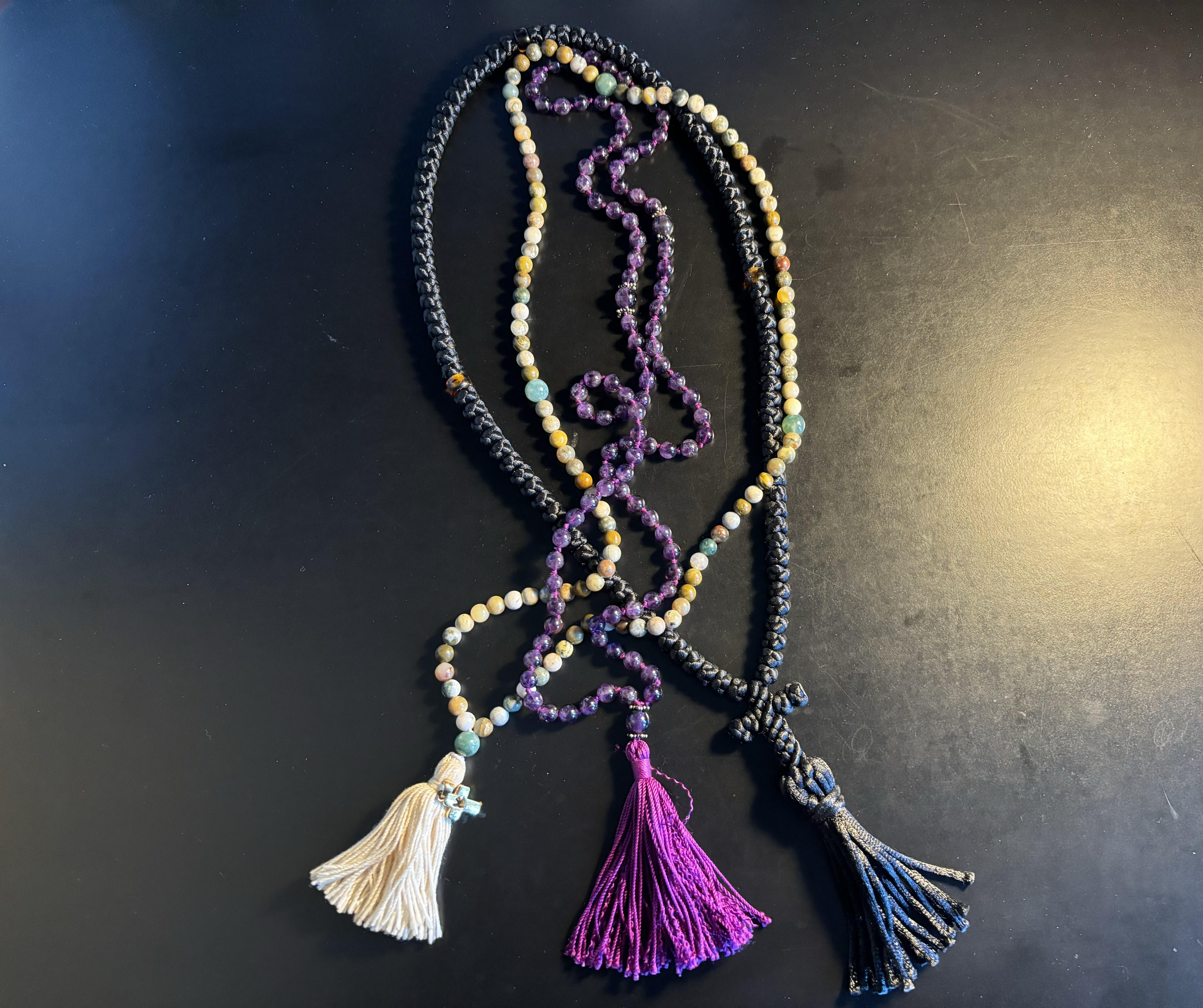
My eastern mala with a cross, my Misbaha, Sufi mala, and my Christian Orthodox Prayer Rope
Did you know there are angels right here among us? At this time last year, angels appeared and I, Doug, my husband, and a very unsuspecting family were blessed. Now some of you reading this may remember that Doug had been diagnosed with bladder cancer last December but what you didn’t know was that there was a back story unfolding that couldn’t be told until the right time. So, before we all settle down for a long winter’s nap, enjoy this beautiful story of awe and wonder.
On November 19, 2022, I received an email from an angel in the Tree of Life community, someone I hadn’t seen or heard from in a while, simply saying, “I have something for you,” and asked for my address. “What a lovely thing,” I thought. The next day, Doug and I read on his My Chart, “Unidentified mass on bladder.” He’d had some symptoms and had gone for tests. It was our 40th wedding anniversary.
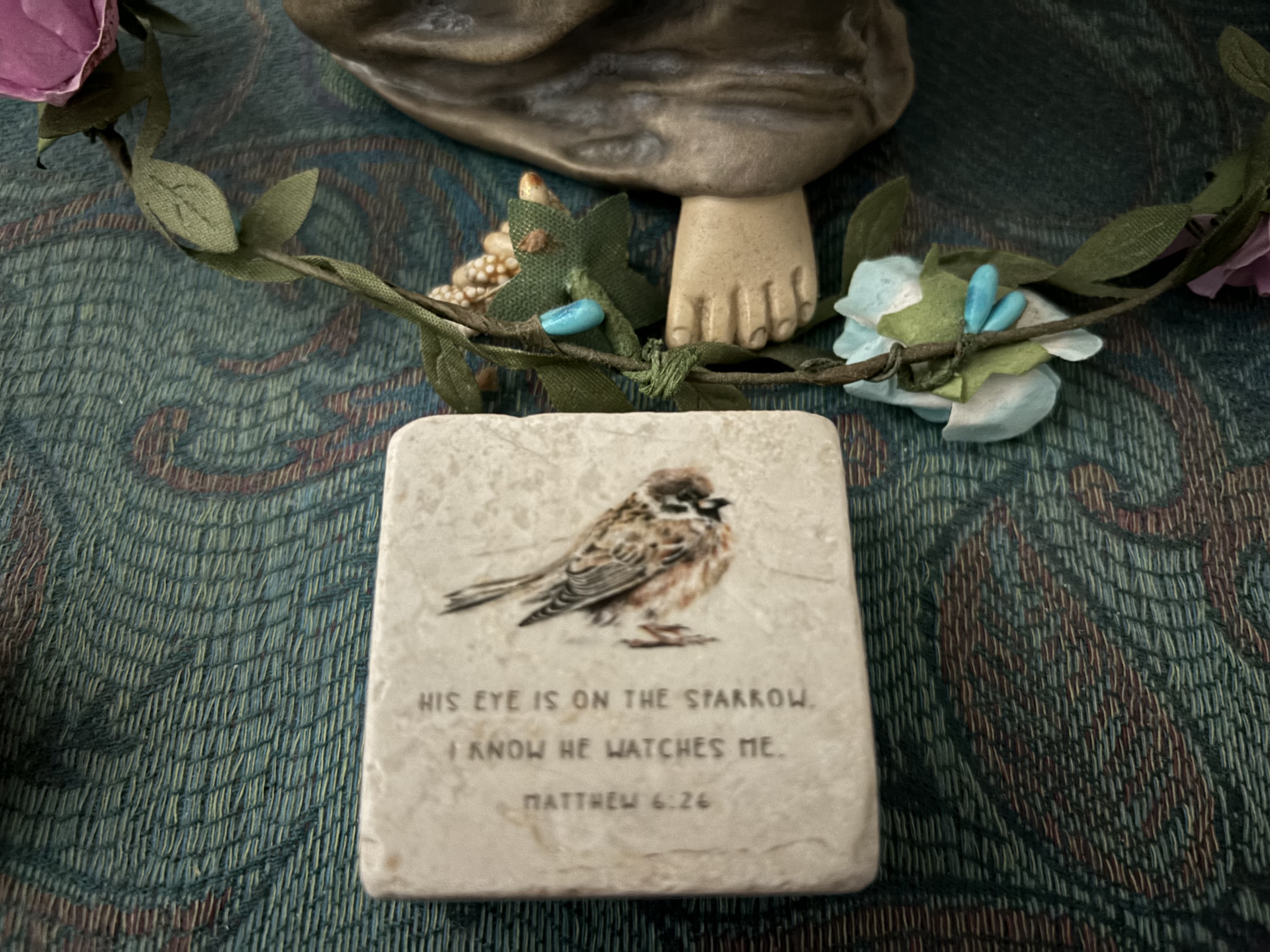
In a few days, my gift arrived. It was a beautiful stone with an image of a sparrow and the saying, “His eye is on the sparrow, and I know he watches me.” (Matthew 6:26) I knew now why this angel had been drawn to send it to me. She’d also known it was one of my favorite sayings. It’s so beautiful and sits on my alter to this day.
Not long after, Doug underwent a procedure, was told it was cancer, and surgery was scheduled for January 19th. Though it wasn’t considered urgent, the doctor said she couldn’t know for sure what the full extent of the cancer was until surgery. For the next several weeks, I couldn’t stop crying. Every time Doug would look at me or say anything sweet, I’d cry. Such is the way of love.
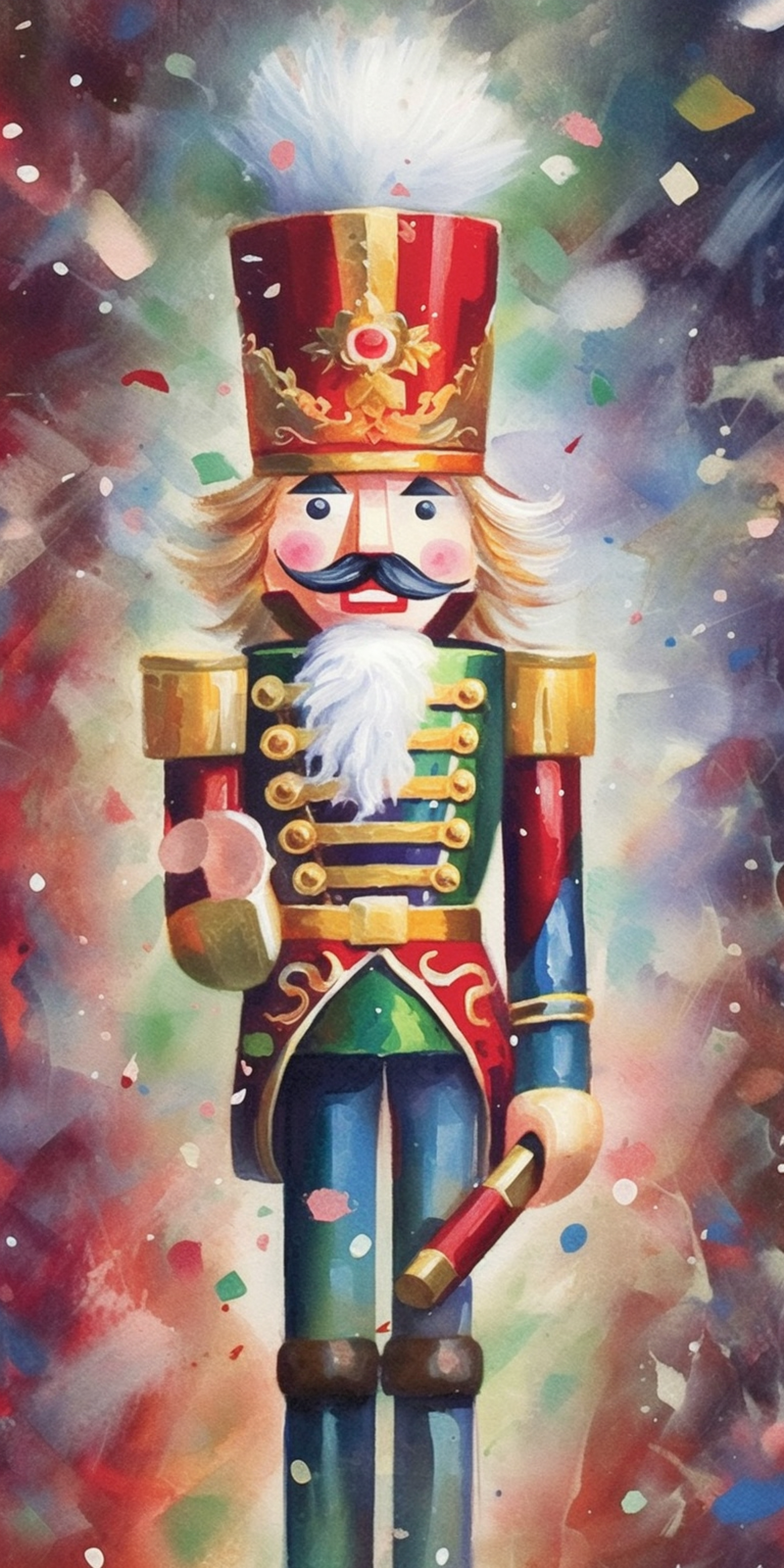
Meanwhile, shortly before all this had happened, we’d decided to really splurge and buy tickets for the Nutcracker at the Boston Ballet. Our granddaughter had been taking ballet for a while and it felt like a good year to offer her and our grandson such a treat. So, we got tickets for our two grandkids, daughter and son-in-law, and Doug and me. This was really a big deal as the tickets were just over $500. But we were so excited about it! We just knew it was going to be a night to remember.
Then, the doctor said she didn’t think it was a good idea for Doug to go, being in such close proximity to so many people. Not knowing the full extent of the cancer, she didn’t want him taking any chances. It was heartbreaking for all of us. But by that time, it was less than two weeks before the show. Now we had no idea what to do with our tickets.
Then, suddenly, we knew exactly what to do. We went down to talk to our resident manager and told her we had 6 tickets we’d like to gift to a family who’d most likely never get to go to the Nutcracker in Boston. Right away her face lit up. “I know just the family!” But then her expression dropped as she said, “But they’d never be able to afford the parking down there.” “We’ll throw in some cash for that!” And with that, it was done. And the best part, they wouldn’t know who’d gifted them and we’d not know who was gifted. I so love God!
Each day after, Doug and I would look at each other and smile. It was the absolute best gift ever for us! And for me, just the thought could instantly turn all my tears to joy.
But the angels weren’t done yet. At almost the exact same time, I got another note from an angel saying she was gifting us with $500 for Doug and me to use however we may choose, maybe take a few days away together. I remember feeling so stunned. I could hardly believe this was happening.
A couple of weeks after Christmas, our resident manager delivered a two-page handwritten letter from the family thanking us. The woman shared that she was a single mom and that times had been especially hard, and she’d been so happy to be able to take her eight-year-old daughter, niece, sister, mother and Godmother to see the Nutcracker. She went on and on about how much it had meant to all of them.
The angel who’d gifted the $500 had reminded us that all things do work for good to them who love God. (Romans 8:28) And throughout the whole season and journey with Doug, my other angel had made sure I’d feel watched over by my beautiful stone.
I mean, really? Does it get any better? I don’t think so.
Today, my Doug is well, due in large part to all of you angels who prayed for him. And at any time throughout the year if my soul starts to feel weary, all I need to do is gaze at my beautiful stone and close my eyes to picture an eight-year-old girl, her cousin and family getting all dressed up to go to the Nutcracker.
Ummmm . . . O Holy Night . . .
And Merry Christmas to All You Angels . . . and to All a Good Night!
I’ll never know her name. Yet, she’ll live in my heart until my last breath. It started with one of those warnings from a newscaster, “The images are disturbing.” Then, amid the overwhelming devastation, I saw a little girl, maybe three or four years old, lying on a makeshift stretcher. Over her small body her dress lay limp, covered with blood and filth spewed from the ravages of war. But it was the blindfold tied around her matted hair that I could imagine left her feeling the most scared: viciously trapped, panicking, frantically groping for any escape out of the dark, crying out, pleading, again and again, “Mama. Mama.”
It was an image from Gaza but to ask where, whom or even why, is to have already lost the moral compass. Perhaps better a question would be, “What if it were my child? My daughter. My son. And what if I remembered that, just a short time ago, she or he was roaming free from concern, likely being messy, clothes soiled from fun due to all kinds of imaginary shenanigans.
Pause. Feel. What if it were my child?
I know many of us are grateful each night, regardless of our particular challenges and circumstances, that we, at least for now, live in a country that’s not being decimated by war. Most of us have a warm bed out of the cold. We’re spending an unprecedented amount for gifts this Christmas and will have to do some serious dieting come January due to our holiday feasting. We can’t even imagine losing water, food, sanitation, safety, with no back-on date posted on our smart phones. We can’t. Or maybe we can so we quickly offer our passing, “That’s so sad,” and escape into the holiday classic, “It’s a Wonderful Life.” I’m no different most of the time.
Until, I heard, “Mama. Mama,” and something in me stirred, deep.
And as I’ve sat with it, it’s made me hold more closely the teachings of the one called Jesus, this Holy Week in particular, as we anticipate the celebration of his birth on Christmas Day. Yes, I’m an Interfaith minister but I also have a long, endearing, familial relationship with Christianity through a small country Methodist Church in the deep south. And I sense that, if Jesus were here, he’d be quite dismayed with how those who call themselves the faithful have come to practice his teachings.
It might serve us all well to remember that Jesus was not a Christian. He was a Jew. The religion of Christianity was founded generations after Jesus’ death by those who could still hear, across time, the ecstatic cry that just his simple presence could elicit. They did, however, manage to record many of his teachings which, by any standard looking at events today, should give us all pause.
For example, Jesus was one who preferred to live on the fringes of society and hang out with those people others would not. Judging from his words, I believe today he’d be at our boarders tearing down walls and welcoming all who yearned for safety and comfort. I can imagine he’d be washing their feet and making sure they were properly clothed and fed for, as we read in Matthew 25:40, “I tell you whenever you did these things [fed, clothed and invited in the stranger] for one of the least of these brothers of mine, you did them for me.”
Similarly, I don’t believe in the middle east today he’d stop to see any distinction between Jews, Muslim, Arabs, Palestinians, before serving any and all who were in need. He’d certainly not be concerned with whether or not they’d found him or loved his Holy Father through the proper religion. Today, he’d most likely look with bewilderment at those who’ve claimed him as their own such as those Christians who say God revealed to them that they should care predominately for Israeli Jews. No such hierarchy of worthiness is revealed in Jesus’ teachings, in fact, quite the opposite. “Just as I have loved you, you must also love one another. (John 13:34)
Perhaps, as expressed in the beautiful hymn, “Oh Holy Night,” this Christmas we should all hope to experience the unconditional love Jesus taught, to better live as he did so we too could feel, “A thrill of hope,” as our, “weary world rejoices,” remembering, “He taught us to love one another,” and that, “His law is love and his gospel is peace.”
Most of all, I pray we all may have just a moment when we too find ourselves consumed by that ecstatic cry, so when we sing, “Fall on your knees, O hear the Angels voices,” we can do nothing else.
Maybe then, we could hear, a world away, a small voice crying, “Mama. Mama,” and know the true meaning of Christmas.
With so much division, manipulation, finger-pointing, and downright ugliness masquerading as civil discourse these days, it’s easy to lose site of the good. And then something happens, quite unexpectedly, that brings a ray of hope to where there was such challenge and despair. It was a simple thing really. Usually is. I’m fortunate to live in a large mill building with people of many ethnicities and it’s not unusual to hear multiple languages in the hallways.
A few days ago, I was walking up the ramp to our main entrance and passed a middle-aged woman and, what looked to be, her grandmother, both Muslim. The grandmother was walking behind slowly, hunched over, and seemed to have some visual impairment. I stopped at the door and held it open. When the grandmother got up to me, she paused, stared softly, and slowly bowed her head. I bowed back. Then, being shorter than me, she reached up and suddenly hugged me saying, “As-salamu alaykum,” a Muslim greeting that means, “Peace be upon you.” She held on for a few seconds as I was feeling oh-my-gosh, and then was finally able to whisper back, “And As-salamu alaykum to you.” Then, they went in and disappeared into our building. But as I write this, I know that somewhere in one of our 300+ apartments there’s a dear elderly Muslim woman who offered me peace that day, and for that I am surely blessed.
I know, like many, my heart breaks for the tragic war now consuming the Middle East. As I expressed in my 11/1/2023 article, “Middle East Peace,” I could respond in kind to the woman because I’ve spent time praying with both my Muslim and Jewish friends. I know that had the elderly woman I met at the door been Jewish, I’m sure she’d have blessed me with, “Shalom aleichem,” generally translated, “Peace unto you.” I could have responded in kind, “Aleichem shalom,” and there would have been no difference in the gift offered or received.
Funny how such a simple act of kindness can ripple and instantly soothe a heart overcome with turbulent fear for the future. We forget how powerful kindness is, too easily discounted, worthy perhaps only of a fleeting smile before getting back to more serious business. That is until an elderly Muslim woman spontaneously hugs you or you, again unexpectedly, have an opportunity to offer something in kind.
A number of years ago, at this time of year, I was standing in line at one of the quick checkout lanes in a grocery store in Milford. It was early evening, and the store was packed. The couple ahead of me had an infant who was becoming more and more fussy. Both parents looked completely frazzled and had that I-can’t-remember-the-last-time-I-slept look. As mom tried to calm the infant, dad was desperately counting out his last penny. He came up short and the cashier, regretfully, said he’d have to put something back.
Without thinking, I jumped in and said, “Don’t worry. I’ll cover the bill.” I’ll never forget the surprise, almost disbelief, mixed with deep gratitude, in their eyes as they left the store. But the good news is I’m absolutely certain that many of you reading this would have done the exact same thing.
But the story doesn’t end there. About a week later, I was in line again at the same store. This time, as I started to empty my cart, the woman in front of me said, “I’m paying for your groceries today. I was behind you last week and saw what you did for that couple with the baby. Now I’d like to do something for you.”
Who knows? Maybe this article will find her and she’ll remember that day and know that her kindness still makes me smile all these years later.
Kindness doesn’t need to know what political party you belong to. It doesn’t care what religion you are or how much money you make. No application is required. We offer kindness because something bigger than us, in the moment, compels us. It sparks an ember, long smothered, awakening an innate sense of our shared humanity, and ignites the fire of neighborly love even before we know what’s happening.
And it changes everyone and everything in its wake. Giver. Receiver. Witness. One and the same now. For the moment, it frees all from the shackles of drudgery, oppression and hatred to find hope and joy where no one would have thought to look. And even years later, just the memory can rekindle the ember again. Such is the power of kindness.
As-salamu alaykum . . .
(This article ran in the NH Concord Monitor 11/30/2023. To read more published newsprint, please visit my website at https://www.stephanierutt.com/)
One day, deep in the magical forest, a holy woman, a Shaman, was sleeping and had a dream. Ahhh…but this was no ordinary dream. When she woke, she was very sad because she’d seen a vision of what was to come. Soon, the forest would lose its magic and become dark and desolate. All the birds would stop singing and all the wondrous forest sounds would become silent. And she was shown that this would happen because people who lived in the forest had lost sight of their own inherent magic.
But she was told there was hope because there was one animal in the forest that had just the right medicine to help people remember their inherent magic and so could return the magic to the forest – and that animal was Squirrel.
Thanksgiving was coming soon and just thinking of how Squirrel might be able to save the beautiful forest filled the Shaman with hope and gratitude. What more could she possibly wish for than for the beautiful forest to be saved from darkness?
Now you might wonder, “Why Squirrel?” It’s not usually exalted as say the eagle, bear, dove or lion. Well, Squirrel medicine teaches us some very important things. It teaches us the importance of gathering and storing energy, resources, we may need for a future time.It teaches us to be awake and prepared to face whatever may come.
But while squirrels are always prepared and resourceful, they’re also fun and curious. They love to play!So, Squirrel medicine teaches us most about balance – working hard yet having fun – preparing for the future but not losing site of the present moment. Squirrel medicine requires us to seek balance in our lives.
The Shaman knew the forest was losing its magic because it was struggling to keep itself in balance with all the changes humans had brought. She knew that, somehow, if humans could remember their own inherent magic, they could find balance within themselves again, and then be able to keep the magic of the forest alive.
So, beating her drum, she started singing a love song especially for Squirrel for the Shaman knew that it was love that attracted all things without fail.
Chapter 2: A Call for Squirrel Medicine
Image courtesy of freepik.com
Squirrel heard the call but was busy gathering acorns for the winter. It was already growing cold and he knew time was short. But the Shaman kept calling and, finally, he couldn’t resist and scampered over to the cottage.
“What’s up?” he asked. “I’m really busy.”
“I have an important assignment for you,” said the Shaman, “one that could save our entire forest from losing its magic and going dark.”
Suddenly, Squirrel paused and frowned, looking worried. “But what can I do?
“I need you to take a special message to the humans who live here. They are the only ones who can save our forest.”
“Why me? I’m just an ordinary squirrel – you know – not one of those special animals humans are always talking about.”
“Ahhhh, but you have, right now, just the right medicine the people need to remember their inherent magic, the only magic that can save our forest.”
“W-h-a-t?” said Squirrel, totally confused . . . but the Shaman just smiled patiently.
Chapter 3: The Gift of the Acorn
Image by ahmadzada courtesy of freepik.com
“So, what do I have that can help humans remember their inherent magic?”
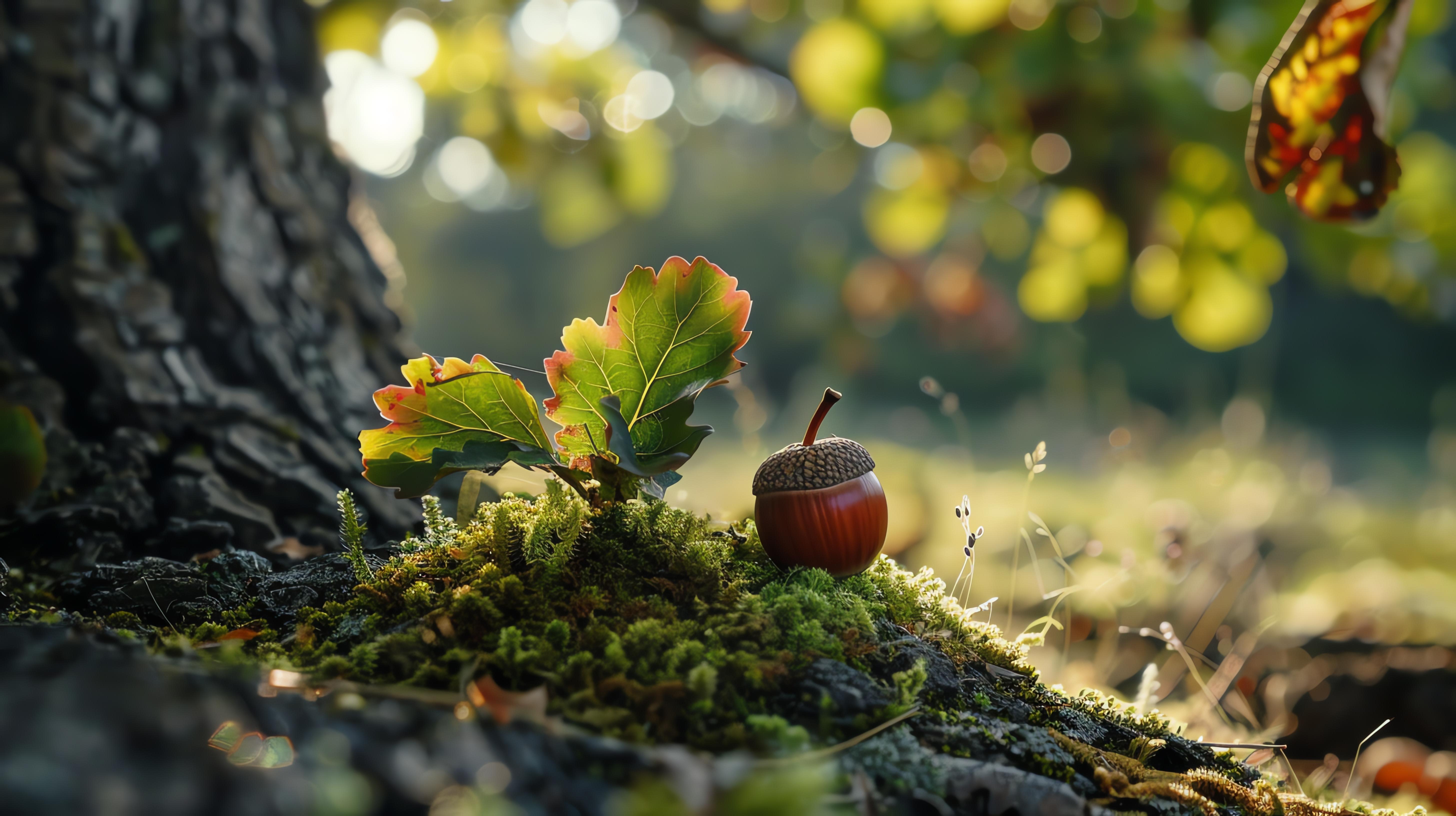
“It’s right there in the Spirit of all those Acorns you’re collecting for winter.”
Squirrel continued to look confused.
“You know how acorns grow into oak trees?” asked the Shaman.
“Well, yea,” answered Squirrel thinking only when he didn’t eat them first.
“But every oak tree is different, right?” said the Shaman. “Yet, each is still an oak?”
“Well, yea . . . So?” Squirrel frowned even deeper.
“The first thing humans need to remember to help save our magical forest is that, just like each acorn already has inside itself what the grown oak tree will be, each human also carries within, right from the beginning, a special magic that is unique among humans – a magic only they can bring.”
“So . . . how will that help save the forest?” asked Squirrel growing even more confused.
“Well, you know how trees are connected, and even help each other through their roots?”
“Yea,” said Squirrel.
“Well, just like the oak trees are all connected through their roots, humans are all connected through their hearts. When humans bring forth their magic, their hearts lights up, and then all the hearts around them light up, and then even the trees light up and all the forest begins to shine just a little brighter.”
“And that’s how humans can help save the forest!” Squirrel suddenly exclaimed scampering back and forth . . . but then stopped and asked, “But what can I do?”
Chapter 4: Under Every Pillow
Image by rorozoa courtesy of freepik.com
“Would you be willing to scurry quietly though the window of each cottage and leave an acorn under the pillow of each sleeping human? I’ll go into the dreamtime and have each of them dream of the acorn under their pillow and of the special message it brings. Would you be willing to do that?”
Squirrel was already counting in his head how many humans lived in the magical forest and thinking it wouldn’t be that many acorns to give up. Besides, if he could help save the forest, well, he just might become one of those special animals humans are always talking about.
“Yes!” said Squirrel scampering back and forth.
“There’s just one more thing,” said the Shaman.
“Oh boy,” thought Squirrel – not wanting his happy bubble to burst.
“You know how every Thanksgiving we have a special ceremony in the meadow and share our blessings?”
“Yea.”
“The night before, would you be willing to make a big heart on the ground made of acorns? And when we all gather together, I’ll let everyone know it was you who left the special acorns under their pillows and you who made the heart.”
For once, Squirrel was speechless. Just maybe he would become one of those animals humans were always talking about.
“Then, I’ll ask the humans to share the special magic the acorns brought, left under their pillows, and then ask them to put the acorns inside the big heart. This will help humans to remember that, while each has a unique special magic, we’re all a part of the one heart of the magical forest. This will help restore balance to what is important, to what it truly means to be happy and alive, which will light up the forest forever.”
As Squirrel scampered away, he knew this would be a Thanksgiving he’d never forget.
And suddenly he was so happy he forgot all about picking acorns and, instead, started playing with his friends. “There’ll still be time for work later,” he thought.
And the magical forest lit up a little brighter.
Chapter 5: The Shinning Forest
Image courtesy of freepix.com
Later, when Squirrel went back to finding acorns, he put the ones he’d hide under each pillow in a special place—careful to make sure he had one for each person in the forest. Then, he collected all the ones he wanted to use to make the heart for the special Thanksgiving ceremony in another place—all the while smiling thinking that, just maybe, now he’d become one of those special animals humans are always talking about—because the Shaman had called on him to help save the forest.
During these challenging times, seeing war raging in the Middle East, the terrorist attack of Hamas on innocent Israelis, and now the subsequent bombardment of the Gaza Strip, it’s easy to succumb to despair. I refuse. Even as I watched the shock and horror on the faces of those Israelis being suddenly snatched, taken prisoner in broad daylight, and now hear the cries of the innocent ones trapped in perpetual darkness in the Gaza Strip without the basic necessities for survival, I refuse.
Hope is only lost when we decide we can do nothing or remain silent. Silence leaves a vacuum for hatred that only escalates as a result of fear – fear of alienation and annihilation. Hope gives rise to conscious action, possibility, as a result of love – love not based on personal emotion but rather on a sense of clarity, that what we do to the other, in the end, we do to ourselves.
Certainly, as we determined after 911, any act of terror must be met with the swift sword of justice. Simply, evil, in any manner, cannot be allowed to prevail. Still, I believe it’s the hope of many that we not simply re-act arbitrarily, but, rather, strive for that conscious action when balancing the scales of justice. It’s a fine, some might say lofty, point but I would argue a critical one influencing the decisions we make.
For example, this distinction has risen as many are contemplating the plight of civilians, particularly those trapped in the Gaza Strip. It might serve us well to ask what happens to our collective psyche when we decide some innocent lives are more worthy of our care than others. It becomes all too easy, framing the argument as perpetrators vs victims, to lose sight that today’s victims are tomorrow’s perpetrators and vise-versa. And so, the wheel of re-active retaliation spins without end while the innocent on both sides continue to suffer and grieve as they bury their children.
Elenor Roosevelt asked, “When will our consciences grow so tender that we will act to prevent human misery rather than avenge it?” Herein lies an important key to stopping re-active retaliation. As I highlighted in my April 30, 2023 Opinion, Our Common Humanity, making opportunities to forge dialogue, expand understanding, and raise awareness is key to helping assumed enemies step off the perpetrator-victim wheel and, together, forge new pathways. Not easy. Messy and challenging for sure. But worth it? Ask the many helpless ones, this moment, watching their loved ones suffer and die and can do nothing about it.
Something happens when we move beyond the more superficial differences and see into our common humanity—that place where it no longer matters, we don’t notice, or forget to ask, what religion, ethnicity or nationality a person is—when we see someone in need. We respond because something bigger compels us. In that moment, if ever so briefly, we contact the common ground of our humanity. And it changes us.
As an Interfaith minister, I have hope because I’ve personally experienced that common ground, one might call our Oneness from a religious perspective, with both my Jewish and Muslim friends.
My Jewish friends practice the great message from the Talmud: “That which is hateful to you, do not do to another. That is the whole law. The rest is commentary.” I’ve learned from them the mysteries of the Hebrew script and where, for example, the first letter is “Alef.” It’s silent signifying the One behind all creation. As Lawrence Kushner writes in “The Book of Letters,” “It [Alef] also begins the most important thing about Him: ECHAD. One. Know that God is One.”
And it didn’t matter that I was not a Jew.
My Muslim and Sufi friends hold fast to the enduring message from the Hadith: “None of you truly believes until you love for your brother what you love for yourself.” I’ve danced in circle form many times to the sacred phrase, “La Ilaha Illallah,” generally translated, “There is no deity but Allah,” and points to the Muslim concept of “Tawhid,” the Oneness of God. I learned the 99 beautiful names of Allah and discovered that the infamous phrase, hijacked by terrorists, “Allahu Akbar,” simply means, “God is Great.”
And it didn’t matter that I was not a Muslim or Sufi.
It would not be possible for the Jews and Muslims I know to participate in any form of terror against others. Their religious practices bring them again and again to stand for hope, possibility and love.
Let’s not allow fear and hatred to dominate. Let’s strive for conscious action to balance the scales of justice. Let’s allow ourselves to imagine the possibility that we could stand together in search of freedom and prosperity for all.
And, above all, let’s choose hope that propels us to love.
In the October 8th 60 Minute story featuring Geoffrey Hinton, a British computer scientist now called the God Father of AI, artificial intelligence, Hinton reported believing AI could bring enormous benefit to humankind yet also warned the AI systems may be more intelligence than we know and could even take over. It led me to speculate on what, at least at this point, I’d imagine AI could NOT do.
I wonder, for example, if it could venture into the Forest of Arden with the banished duke, as in Shakespeare’s As You Like It, to find, “tongues in trees, books in running brooks, sermons in stones, and good in everything?”
Would it ever desire to collect rocks as many children and adults do and, just maybe, wonder why? Indigenous folklore tells us stones are the home to the hidden folk, the mythological world of the fairies, gnomes, trolls and forest guardians. It’s why British sculpture Andy Goldsworthy says, “There is life in a stone. Any stone that sits in a field or lies on a beach takes on the memory of that place. You can feel that stones have witnessed many things.”
The fairies, in particular, have been behind the scenes weaving their magic across time. When the late renowned botanist Dr. George Washington Carver was asked how he could talk to the little flower, he answered, “Through it I talk to the Infinite. And what is the Infinite? It’s that still small voice that calls up the fairies.” And the Sami people of Northern Europe believe their joiking, a ritual practice of spontaneous singing engendering a spiritual connection with the whole of life, was a gift from the fairies and elves of the artic lands.
Will AI be able to converse with the hidden folk or with the Infinite budding the flower? Will it be able to sing a love song to the tiny fledging pine, howling woodpecker or serenade the moon spilling starlight over silent fields of snow?
Will AI be able to hunt with the eagles as 13-year-old Aisholpan Nurgaiv does, a Kazakh girl from Mongolia, who trained to become the first female eagle hunter in twelve generations in her nomad family?
Will AI have the capacity for a love as wide as one like Simone Weil? A well-off secular French Jew, Weil was so affected by what was happening to other, less protected, people under the Third Reich in World War II, she’d decided to live as they lived and died of hunger.
For whom or for what would AI be willing to die?
And what of the mythical hero’s journey highlighted by the late Joseph Campbell? You know, the one we humans embark upon when we begin a relationship, start a business, create the next amazing thing, the journey that inevitably brings us to confront what stands in the way of our success, those inner demons and dragons, to, in the end, emerge victorious?
Will AI be able to recognize and slay its own digital dragons?
And though AI may be able to categorize and critically analyze all the great works of art that have ever existed, will it ever be able to stand in front of just one of them and be held breathless, barely able to whisper “ahhhhhh?”
Will AI ever be able to join with others to build a braided bridge? Communities on either side of a canyon in Peru do. Every year, the Q’eswachaka Bridge is rebuilt using traditional techniques since the time of the Incas. The communities gather to weave, tie and haul braided rope to build the bridge that will carry all of them across the canyon. And at the end of three days, there’s a grand celebration.
Will AI ever know the feel of rope rubbing across many hot callused fingers?
If we’re curious enough to leave behind futuristic possibilities, just for a while, and venture into the Forest of Arden we just might find there what makes us fully human. We may remember that thanking the fish for its life is the greatest blessing, and turn at the apex of danger and beauty, life and death, with wide stretched arms. We just might start to notice the sacred in apples, on the face of the one bagging our groceries, and in the silent communion we feel with those who are suffering.
And before we know it, we just might find ourselves, like the Sami, bursting into song. For we know now we’re an integral part of the whole. We’re ready now to build a braided bridge and to invite those who live across the canyon, whoever they may be or however they may believe, to join us in building this bridge, one that secures safe passage to all when crossing a great chasm that divides us.
Who knows? Perhaps AI would map the same techniques used by the Inca, or not. No matter. In the Forest of Arden, the real gift would be to sit together and build the bridge, one braid, one tug, one haul, at a time.
Rev. Dr. Stephanie Rutt offers her work through the Tree of Life School for Sacred Living, LLC, and also serves as Founding Minister of the Tree of Life Interfaith Temple in Amherst, NH. She is the author of five books and additional interfaith curricula. To learn more about her books, as well as online and in-person classes and workshops, please visit her website at https://www.stephanierutt.com.










 Stephanie Rutt