“Amazing grace, how sweet the sound, that saved a wretch like me! I once was lost but now I’m found, was blind but now I see.”
We are all wretched. And by grace in many forms, saved. John Newton knew this when he wrote the well-known Christian hymn “Amazing Grace” in 1772. He’d been a slave trader capturing natives from West Africa to be sold to markets around the world. But during a fierce storm he feared would cause a shipwreck, he experienced a conversion which would lead him to become an avid Abolitionist and later an ordained minister of the Anglican church.
Sadly, much in our history did not follow such an example of humility born of grace. And today, if we are going to confront and solve our systemic problems together as Americans and preserve our democratic republic, we too must first “see” when and where we’ve been “lost” before we can get “found.” For starters, we must acknowledge that Christopher Columbus did not discover America as many of us were taught. This nation was stolen from Native Americans who’d called it home for thousands of years. In our country’s early formation, much of our wealth was built on the backs and brawn of slaves deemed to be 3/5 human, as was stated in our U S Constitution, for the purposes of determining congressional representation. Women had to take to the streets with a decades-long struggle to demand the right to vote. Still, it would be another forty-five years, with the passage of the Voting Rights Act and the Civil Rights movement, before African Americans could begin their quest for full citizenship.
In our more recent history it’s immigrants, often escaping life-threatening conditions at home, coming here glad to work menial labor jobs, who are now in danger of being labeled criminals and rounded up off our streets and deported without any due process.
President Trump, surrounded by Christian evangelical ministers, tells us we can make America great again. Again? As it was when? Oh yes, must be before DEI policies. A time when largely only white males were valued and those of other ethnicities, as well as women, knew their God given place. Before the social movements of the 1960s began unraveling the former idyllic Mayberry American society. Before exposing the barely half-truth of the “All men are created equal” proclamation in our Declaration of Independence. Modern blasphemy!
A particularly egregious expression of being “blind,” is seeing female legislators proudly displaying crosses around their necks while taunting the value of rounding up thousands of the so-called “worst-of-the-worst,” terrorizing communities and separating families, many of whom just happen to be people of color. And they eagerly join their male counterparts in slashing SNAP benefits to the most vulnerable, cutting money to Medicare and Medicaid, reducing access to doctors and threatening the closure of hospitals and nursing homes putting millions of Americans at risk. Such actions I would call no less than the weaponization of Christianity.
What might they “see” if touched by just a hint of amazing grace? They might see the immigrant they’re rounding up as not so different from the ones in their own family, just several generations back, who came to this county in search of a new life. They might see the face of their own son or daughter when they indiscriminately round up a mom or dad leaving children behind. They might see the struggling single mom going to the food pantry for the first time because her benefits were unexpectedly cut. Perhaps they might even feel the desperation of the young man, recently laid off, who knows he must swallow his pride and rely on church and strangers to be Santa so his kids can still believe on Christmas morning. They might see the elderly woman who lives alone who must choose between food and heat. They may even see the crowds in our emergency rooms growing daily because so many can no longer afford medical insurance.
Imagine in moments of grace, such professed Christians just might ask themselves, “What would Christ do now?”
If our history has taught us anything it’s that our great American spirit is too grand to allow itself to be silenced, nullified, or codified into any ideology that erases diversity, ignores equality, and resists inclusion. Perhaps this is why Chicago priest, Rev. Pfleger, said, “I believe it’s time for the churches to lead the revolution, a spiritual revolution to stand up to this fascism, or the streets are going to do a revolution and it’s going to be bloody and ugly.” (Irish Star, Falyn Stempler, 12/6/2025)
I pray for a spiritual revolution. Yet, who will emerge victorious? The slave trader deciding who is worthy and who is not or those touched by grace ready to reignite the torch of our Lady, the beacon of light for the world?
One of my favorite things over the weeks leading up to Christmas Day is to get up before the sun and just sit in the lights with my headphones and favorite carols and hymns. Pure magic. Here’s a sample . . .
It’s not yet dawn with only the reflection of lights in the window flickering against a dark sky. And before I know it, I hear the Little Drummer Boy from afar coming to play in the chambers of my yearning heart. Do you see what I see? A star, a star, dancing in the night with a tail as big as a kite ~ with a tail as big as a kite.
I do! I do! I am dancing with that star!
Do you hear what I hear? A song, a song, high above the trees with a voice as big as the sea ~ with a voice as big as the sea.
I do! I do! My voice is singing big as the sea!
Then comes OHoly Night. A thrill of hope, a weary world rejoices, for yonder brings a new and glorious morn! Fall on your knees! O hear the angels voices! O night divine! O night, O night divine.
And I am on my knees now, empty and fully surrendered, in the sweet silence.
And soon I’m lifted back up by Andrea Bocelli’s angelic voice singing The Lord’s Prayer. Our Father which art in heaven, or in Jesus’ words, Abwoon D’bwashmaya, exulting Abba, the Holy One breathing all creation into being.
And by the end of the Prayer, I can only say, Abba, I Belong to You,* over and over.
In a world weary and torn, let’s be the dancing star. Let’s make a joyful noise. Let’s fall on our knees to be filled with that peace that passes all understanding. And let’s remember we are all children of the Holy One, the One called by many names.
And all before breakfast!
And into our day, let’s carry three gifts: a compass to forever point us toward the North Star; a sword to slay the fear within so we may transform hatred and injustice without, and a medicine bag with a never-ending flow of stardust to remind us that the more love we give away the more we have.
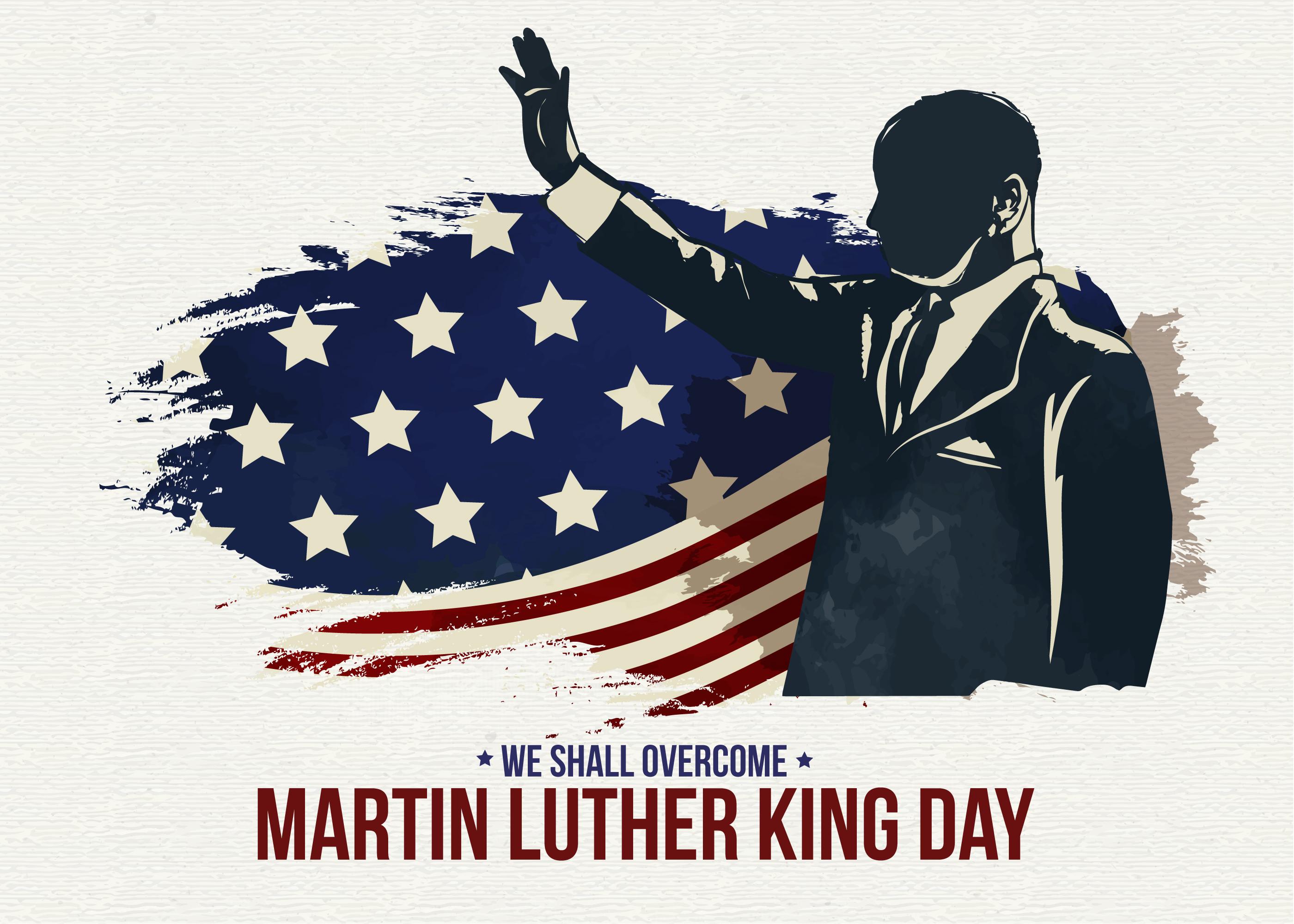
In honor of Dr. Martin Luther King, Jr. day . . . A blog I first posted in January 2020.
In 2016, I visited the largest mosque in New England, The Islamic Society of Boston Cultural Center (ISBCC), in Roxbury Crossing, MA, to hear Sheikh Yasir Fahmy speak on The Toxicity of Othering. As usual, I did not receive what I expected. No, I received so much more!
About a third of the way through, I started to recognize similar teachings to that of Dr. Martin Luther King, Jr. I noticed that if I were to remove the Arabic phrases the Sheikh occasionally included and changed “Allah” to “God,” that, indeed, the core message would seem to be the same. Curious, once home, I listened to the video again off the ISBCC website and printed out a transcript. From there, my journey began and below are my findings which led to the creation of The Sheikh & The Preacher. The essay, expanded from this blog, was chosen for inclusion in the anthology One Nation, Indivisible: Seeking Liberty and Justice from the Pulpit to the Streets, edited by my former professor Celene Ibrahim and released by Wipf and Stock Publishers in 2019.
The four key categories below came to me as I heard the similarities unfold. The sub-headings I also included as a way to highlight the specific teachings within each category. Sheikh Yasir Fahmy’s quotes have been occasionally edited by punctuation only to facilitate ease of reading. The numbers noted at the end of each quote indicate where in the video the wording appeared. The quotes by Dr. Martin Luther King, Jr. are taken directly from the sources indicated at the end of each quote.
Enjoy…
Origins of Unhealthy Otherness
Exalting the Self and the Self’s Group as Superior
The Sheikh:
“We want upliftment. We want recognition. We want stability. We want to be known and recognized. We want to be justified. Because of our distance from Allah, we think that the only way I am to make myself big is by belittling others.” (25:05 – 25:34)
The Preacher:
“We all have the drum major instinct. We all want to be important, to surpass others, to achieve distinction, to lead the parade…And the great issue of life is to harness the drum major instinct. It is a good instinct if you don’t distort it and pervert it.” (Sermon at Ebenezer Baptist Church, February 2, 1968)
Outcomes of Unhealthy Otherness
Removing the Inferior Others
The Sheikh:
“[At the extreme, this need for recognition] becomes toxic, demonic, destructive. The self becomes self-aggrandizing and self-absorbed. (2:57 – 3:11) You are a danger to my existence, to my power. You threaten me so I want to destroy you. (5:35 -5:43) [These are] diseases of the heart that exist at the root of this toxic other. (18:44-18:50)People have trouble distinguishing between religious or cultural expressions and human value.” (9:48 – 9:54)
The Preacher:
“We’ve been in the mountain of war. We’ve been in the mountain of violence. We’ve been in the mountain of hatred long enough. It is necessary to move on now, but only by moving out of this mountain can we move to the promised land of justice and brotherhood and the Kingdom of God.” (Sermon at Temple Israel, February 26, 1965)
How to Combat Unhealthy Otherness
Humbly Examine the Self
The Sheikh:
“So, brothers and sisters as we think critically about this disease that exists in our society we have to begin with ourselves. We begin by looking in the mirror and thinking, ’Am I a person who otherizes?’ Am I someone who puts others into other ugly categories and belittles them because of who they are?” (21:49 – 22:13)
“We must take a step back and before really thinking about what people are doing to me, I have to ask myself, ‘To what extent do some of these diseases exist within me?’ For to them as you do it, it will be done to you. Before we sit there and look at others, we have to ask, ‘Am I truly embodying the best of prophetic ideals in this particular regard?’” (7:10 – 8:02)
The Preacher:
“Now first let us deal with this question, which is a practical one: How do we go about loving our enemies? I think the first thing is this: In order to love your enemies, you must begin by analyzing self. And I’m sure that seems strange to you, that I start out telling you this morning that you love your enemies by beginning with a look at self.” [later] “There might be something within you that arouses the tragic hate response in the other individual. And this is one of the tragedies of human nature. So, we begin to love our enemies and love those persons that hate us, whether in collective life or individual life, by looking at ourselves.” (Loving Your Enemies, Nov. 17, 1957)
How to Cultivate Healthy Otherness
The Sheikh:
The purpose of all creation is ‘so you may know one another,’ to have an intimate engagement with people. [Allah said] I made you into these different tribes that you might know one another. So, it is through humility—that is the way we begin to heal the pains of our society.” (29:36 – 29:56)
The Preacher:
“People fail to get along because they fear each other; they fear each other because they don’t know each other; they don’t know each other because they have not communicated with each other.” (Advice for Living, May, 1958)
Recognize the Common Unity and Destiny of the Human Soul
The Sheikh:
“When Muhammad stood up before a Jewish funeral procession and was asked why, he replied, ‘Is he not a soul that deserves honor, dignity and respect? He is a human soul and, therefore, has inherent value and has inherent sacredness and sanctity and the human soul should be honored and respected regardless of the realities of that person. That’s the prophetic ideal that must thrive in societies.’” (8:15 – 8:59)
The Preacher:
“They [our white brothers] have come to realize that their freedom is inextricably bound to our freedom. We cannot walk alone. [later] We will be able to speed up that day when all God’s children, black men and white men, Jews and Gentiles, Protestants and Catholics, will be able to join hands and sing in the words of the old Negro spiritual free at last! Thank God Almighty, we are free at last!” (I Have a Dream Speech, August 28, 1963)
See the Sanctity Within Each Person
The Sheikh:
“Am I someone who has genuine honor for others, genuine love? Can I see the sanctity in human beings no matter who they are? Rather than looking out into the world, rather than seeing all the ugly, I see all the beautiful. I see the beauty of human beings who are struggling to just be there.” (22:17 – 22:34)
The Preacher:
“I have a dream that my four little children will one day live in a nation where they will not be judged by the color of their skin but by the content of their character.” (I Have a Dream Speech,August 28, 1963)
Seek to Love and Forgive Your Enemies
The Sheikh:
“Only Allah can measure the God consciousness of others. It’s not your responsibility to identify others as being this or that. (27:40 – 28:03) We hold dear to our beliefs. We have a distinct desire to see that human life is treated as sacred regardless of the differences that may exits—even in the quote-unquote enemy. No matter your worst enemy, whoever they may be, they deserve dignity as prescribed by Allah.” (16:22 – 16:58)
The Preacher:
“And so I stand here to say this afternoon to all assembled here, that in spite of the darkness of this hour, we must not despair. We must not become bitter nor must we harbor the desire to retaliate with violence. No, we must not lose faith in our white brothers.” (Eulogy after bombing of Sixteenth Street Baptist Church, September 18, 1963)
Care for One Another
The Sheikh:
“That’s what it means to be a mercy to mankind. To dignify others is to make sure that everyone comes before me. I want people to be lifted high and if it requires that I bow down and that my neck is broken for others, I will do it. That is the prophetic spirit. That is what it means to honor others, to care for others, regardless of religion or ethnicity or race or even in financiers in the economic realm.” (20:16 – 20:50)
The Preacher:
“The true neighbor will risk his position, his prestige, and even his life for the welfare of others. (From his 1963 book, Strength to Love.) Everybody can be great because anybody can serve. You don’t have to have a college degree to serve. You don’t have to make your subject and verb agree to serve. You only need a heart full of grace; a soul generated by love.” (The Major Drum Instinct, sermon adapted from the 1952 homily ”Drum-Major Instincts” by J. Wallace Hamilton, 1952)
Cultivate a Consciousness of Love
The Sheikh:
“The most dignified and the most honorable amongst creation is the one who has the most God consciousness.“ (26:50 – 26:57)
The Preacher:
“Inject within the very structure of the universe that strong and powerful element of love.” (Loving Your Enemies, Nov. 17, 1957)
Seek to be Vehicles of Goodness and Unconditional Love
The Sheikh:
“May he make us vehicles for good on this earth. May he make us prophetic vehicles of change toward goodness on this earth. May we be sources of mercy for others on this earth.” (26:57 -29:28)
The Preacher:
“Man must evolve for all human conflict a method which rejects revenge, aggression and retaliation. The foundation of such a method is love. [later] I believe that unarmed truth and unconditional love will have the final word in reality.”(Noble Peace Prize Acceptance Speech, December 10, 1964)
Closing Quote: The Sheikh
“May Allah rectify the conditions of our humanity on this earth. May he allow it to begin with us. May he guide us, guide through us. May Allah rectify our hearts of the diseases that have caused the problems that we see today so that we can see a society that is prospering.” (30:17 – 30-22)
Closing Quote: The Preacher
“I have a dream that one day every valley shall be exalted, and every hill and mountain shall be made low, the rough places will be made plain, and the crooked places will be made straight; and the glory of the Lord shall be revealed and all flesh shall see it together.” (I Have a Dream Speech,August 28, 1963)
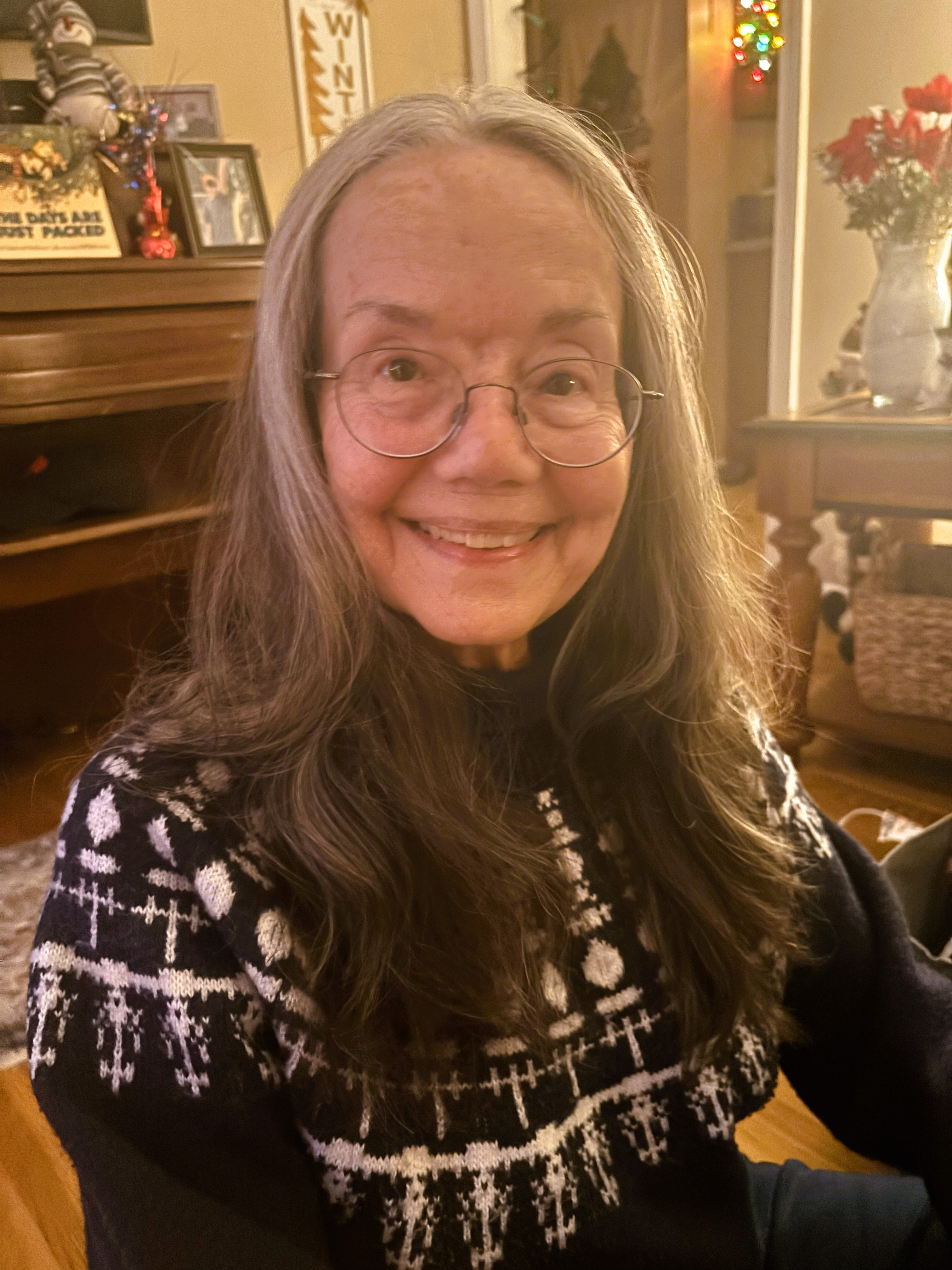
Rev. Dr. Stephanie Rutt offers her work through the Tree of Life School for Sacred Living, LLC, and also serves as Founding Minister of the Tree of Life Interfaith Temple in Amherst, NH. She is the author of five books and additional interfaith curricula. To learn more about her books, as well as online and in-person classes and workshops, please visit her website at https://www.stephanierutt.com.









 Stephanie Rutt